News
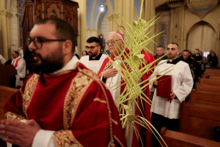
As Christians across the globe remember Jesus’ journey through Holy Week, Israel is taking the unprecedented steps of restricting access to holy sites in Jerusalem.
Israel is blocking access to the Church of the Holy Sepulchre, as well as the Western Wall, and the Al-Aqsa Mosque complex indefinitely after the outset of the U.S.-Israeli war with Iran, impacting typical observance of the Christian Holy Week, Ramadan, and Passover and restricting travel into East Jerusalem.
For Palestinian Christians, it would mark the first time that access to the church—which is known as the site of Jesus’ crucifixion, burial, and resurrection—is blocked over Easter. Historically, thousands of Christians around Jerusalem have traveled to the city and church as part of their Easter celebration.

There are congregations that would brand her a sinner. But here at St. Cecilia’s Roman Catholic Church in Boston, Rachel Burckardt gives voice to the angels.
She’s 71, transgender, a civil engineer by day, and a composer of spiritual music by nights and weekends.
While religion has been used for decades to ostracize many transgender people, Burckardt has found that faith drives acceptance in her community. It has been the bedrock on which she has formed her closest friendships, found moral clarity in challenging times and built radically inclusive communities in greater Boston.
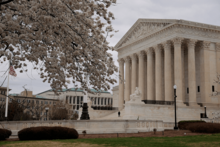
The Supreme Court ruled 8-1 Tuesday that a Colorado ban on conversion therapy for youth violates the free speech rights of a Christian counselor, clearing the way for a practice that goes against the recommendations of every major medical association in the country.
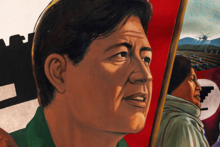
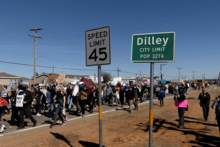
Anyra Cano learned a little bit about César Chávez, Dolores Huerta, and the United Farm Workers movement growing up in the 1990s in El Paso, Texas, but the state curriculum didn’t go deep. It wasn’t until she became a pastor that she began to dig into the work of the legendary civil rights leaders. She knew she wanted to dedicate her ministry to social justice for the most vulnerable.
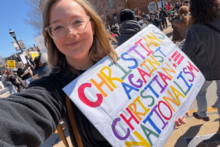
On March 28, one day before celebrating Jesus’ procession into Jerusalem on Palm Sunday, millions of Christians processed through the streets to declare “No Kings!”
Protesting the Trump administration’s authoritarianism, Christian nationalism, violence at home and war abroad, people of faith joined their neighbors to stand for democracy. More than 3,000 events took place across the globe, mostly in the U.S., with Minnesota—where there has been strong, communal resistance to immigration agents’ violence—serving as the flagship event.
Sojourners asked our readers to send us their photos and reflections from their own participation in No Kings protests. Below are your contributions.
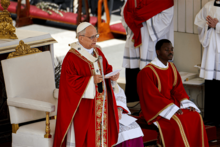
Pope Leo said on Sunday that God rejects the prayers of leaders who start wars and have “hands full of blood”, in unusually forceful remarks as the U.S.-Israel war with Iran entered its second month.
Addressing tens of thousands in St. Peter’s Square on Palm Sunday, the celebration that opens the holy week leading up to Easter for the world’s 1.4 billion Catholics, the pontiff called the conflict “atrocious” and said Jesus cannot be used to justify any wars.
“This is our God: Jesus, King of Peace, who rejects war, whom no one can use to justify war,” Leo, the first U.S. pope, told crowds in brilliant sunshine.

Civil rights leader Dolores Huerta, who co-founded the United Farm Workers union with Cesar Chavez and fought alongside him for decades to expand labor rights in the U.S., on Wednesday accused Chavez of sexually assaulting her in the 1960s.
Huerta said in a statement that she was sharing her story in light of a multi-year New York Times investigation, also published on Wednesday, that detailed a larger pattern of sexual misconduct allegations against Chavez, who died in 1993 at the age of 66, including testimonies by women who said he molested and raped them when they were minors.

Whatever you may have heard about the Target boycott ending, here’s the truth: The boycott is not over for many Black women. It probably never will be.
A year ago, Black women started the movement to boycott the retail giant after it made a U-turn on its numerous commitments to racial equity—and particularly the Black community. That movement took various forms: Ohio state Sen. Nina Turner called for a national boycott, as did grassroots activists in Minneapolis, where Target is based. Rev. Jamal Harrison Bryant of Atlanta’s New Birth Missionary Baptist Church also launched a 40-day “Target fast” that stretched into nearly 400.
The boycott played a key role in a year of declining sales and profits that forced CEO Brian Cornell to step down. Target’s stock price dropped about 30 percent in 2025.
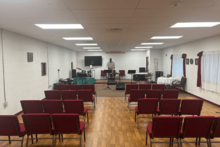
Maranatha Church, Jasmine Ministries, and Creole Resources have served the Haitian population in Spokane, Wa., for years—most recently by creating job and housing opportunities made scarce to them due to social and legal barriers created by the Trump administration.
Only a month ago, many Haitians in Spokane nearly saw the end of their Temporary Protected Status, leaving them with the choice to return to Haiti or find a new way to achieve legal status in the U.S.
Even though a federal judge barred the expiration from taking effect, public uncertainty about the longevity of their TPS has made it hard for Haitians in the U.S. to do things like rent an apartment or apply for jobs.
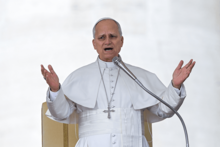
Pope Leo XIV, the first U.S.-born pope, issued an urgent call for a ceasefire in the U.S. and Israeli war with Iran during prayers before tens of thousands gathered on St Peter’s Square in Rome on Sunday.
“In the name of the Christians of the Middle East and of all women and men of goodwill: Cease the fire! Let paths of dialogue be reopened,” the pontiff was quoted as saying by the Vatican’s news website.
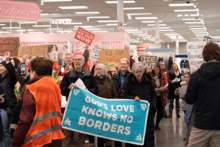
When Mennonite Action formed to oppose the U.S. support for Israel’s occupation of Palestine, they never imagined they’d soon be opposing occupation in their own backyard. As federal immigration forces descended on Minneapolis and other cities across the nation, Mennonite Action worked to defend their neighbors, oppose unjust immigration policy, and educate Anabaptist participants on the connection between Christian Zionism and Christian Nationalism.
Since establishing itself with just seven volunteers meeting virtually, Mennonite Action has grown to five paid staff members, four volunteer leaders, and now holds national leadership retreats annually. After its November 2024 retreat following the presidential election, the group felt that public action against new immigration enforcement would be necessary. Sarah Nahar, the staff supervisor and a member of the Mennonite Action steering committee, said the leadership team and staff worked on solidifying organizational language while remaining steadfast in their commitment to public action in support of Palestinians.
“There are deep, intertwined mechanisms of power and oppression operating in the U.S.-Israeli occupation of Palestine, and many of us in the room knew that,” Nahar said. “One of the things that we worked really hard to do in that meeting was to talk about how this wasn’t a transition or a shift.”

As artificial intelligence-generated songs and musicians multiply across streaming platforms, Contemporary Christian music audiences and creators are reckoning with the technology’s meaning for the booming genre, the opaque industry, and the very heart of Christian music.
In November 2025, Christianity Today reported on Solomon Ray—an AI-generated artist who boasts 499,000 listeners on Spotify. But Ray is not the only CCM AI artist garnering thousands of listeners. Minimal artist descriptions, quick release schedules, no contact methods, no website, and no tours or physical appearances are all indicators of potential AI-generated artists, and CCM has no shortage. Smaller accounts still have thousands of monthly listeners, including the likes of Jaxon Maverick Phoenix at over 39,000, The River Sons 59,000, and Glory in the Ruins 68,000.
Their music is nothing elaborate and draws firmly from the CCM tradition: “I’ve read the words, I know they’re true but some days they feel far from view / I’m still holding on to what you said, even when the lies scream loud instead,” are some lyrics to “Faith Over Fear,” by The River Sons. The band’s page description is equally vague.
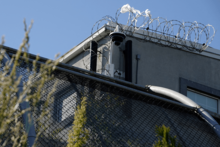
A set of Catholic investors said on Monday private-prison operator GEO Group has rejected a shareholder vote designed to shed light on alleged human rights violations in its operation of ICE detention facilities as part of U.S. President Donald Trump’s immigration crackdown.
The government contractor has become one of the biggest benefactors in Trump’s expansion of the Immigration and Customs Enforcement agency, including operating a fast-growing detention center in Southern California. Complaints of poor treatment, including dismal sleeping conditions and a lack of fresh air at facilities run by GEO and others, have sparked protests against the administration as it ramps up detentions and pushes for mass deportations.
A group of social activist investors led by Jesuit priests said GEO rejected a proposed shareholder vote to review its human-rights conduct, ended talks on facility visits and reduced its reporting on human rights.
As the U.S. embarks on a massive expansion of the country’s immigrant detention capacity, a coalition of organizations opposing abortion are calling on President Donald Trump to stop detaining pregnant, postpartum, and nursing immigrant women.
Rehumanize International, which opposes abortion, the death penalty, war, and other forms of “aggressive violence,” spearheaded an open letter to Trump, Department of Homeland Security Secretary Kristi Noem, and Immigration and Customs Enforcement acting Director Todd Lyons. Dozens of signatories—including representatives of Secular Pro-Life, Live Action, Anglicans for Life, and some state-level affiliates of the National Right to Life Committee—urged the Trump administration to immediately resume enforcing federal policy against holding pregnant and postpartum women in ICE detention.
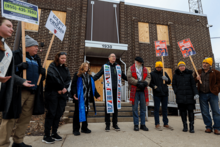
A federal district judge ruled that government authorities must allow clergy to minister to Broadview Processing Center detainees on Ash Wednesday this Feb. 18. The order, if followed, fulfills a year of organizing by Chicago area clergy to minister to detainees of Immigration and Customs Enforcement within the oft-protested facility.
The government and its officials substantially burdened the exercise of religion by the clergy group who brought the lawsuit and made no argument that the burden was “in furtherance of a compelling governmental interest, and that it is the least restrictive means of furthering that compelling governmental interest,” according to the injunction, written by Judge Robert W. Gettleman.
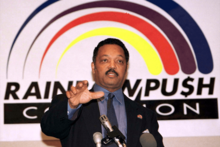
Charismatic Civil Rights leader Jesse Jackson, an eloquent Baptist minister raised in the segregated South who became a close associate of Rev. Martin Luther King Jr. and twice ran for the Democratic presidential nomination, has died at age 84, his family said in a statement on Tuesday.
“Our father was a servant leader - not only to our family, but to the oppressed, the voiceless, and the overlooked around the world,” the Jackson family said.
Jackson, an inspirational orator and long-time Chicagoan, was diagnosed with Parkinson’s disease in 2017.
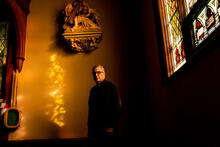
When Father Dale Korogi takes the podium to give the homily to the parishioners of the late morning Mass at Ascension Catholic Church in north Minneapolis, he is used to seeing hundreds of faces watching him—mostly the faces of immigrants from Latin America.
Now, he sees only a few dozen in the pews, as most of the immigrants in his congregation are staying home until the Trump administration withdraws the thousands of immigration agents who have been deployed in Minnesota as part of Operation Metro Surge.
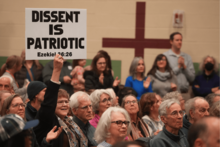
Church-supervised hubs to house and care for children separated from their parents. Phone chains to activate citizen networks if federal immigration agents are spotted in the community. Volunteers to deliver food to hungry neighbors from their own cars instead of food pantry trucks. Training on what to do if agents breach one of the churches planning to provide sanctuary to immigrant families.
These are just some of the preparations that residents of Springfield, Ohio, have made in recent days as the country barrels toward the end of an immigration program that has allowed some 330,000 Haitians to legally live and work in the United States because of the rampant violence and political volatility in Haiti. Though conditions there have not improved — and perhaps only worsened — Temporary Protected Status, or TPS, ends for Haitians on February 3. There are as many as 15,000 immigrants in the Springfield area, many of them Haitian, and the city of about 60,000 is ramping up efforts to try to protect their community from the type of chaotic, violent assault by federal immigration agents that claimed two lives in Minneapolis in recent weeks.

As a lifelong resident of Minnesota’s Twin Cities and a minister trained in deescalation, Matt Moberg has spent many of his past mornings at the Whipple Building in Minneapolis alongside those protesting Immigration and Customs Enforcement descending on their cities. He’s spent his nights at the 19,000-seat arena in the Target Center, as a chaplain to the NBA’s Minnesota Timberwolves.
“Sports can be done and sports can be held—and I think the Timberwolves in particular do it well—not as a distraction from real-life unfoldings,” Moberg told Sojourners. “It's a way to go, we’re still going to come together, not in spite of that, but because of that, and figure out how we can move forward together.”
Now, Moberg’s found himself in a small spotlight after his words reflecting on faith and social justice went viral on social media, where he chastised churches for “posting prayers for peace and unity today while my city bleeds in the street.”
“Don’t dress avoidance up as holiness. Don’t call silence ‘peacemaking,’” he wrote. “Don’t light a candle and think it substitutes for showing up.”

After federal agents shot and killed two people observing federal immigration enforcement in Minnesota, many across the country started looking for ways to express solidarity with those peacefully resisting the surge of violent government intervention in the Twin Cities. As the local movement continues to grow, national interest in providing support is growing along with it.
As activists, organizers, and everyday citizens mobilize to protect their neighbors, Sojourners asked Minnesota faith leaders how those outside the state can offer support with time, resources, and spiritual practices.