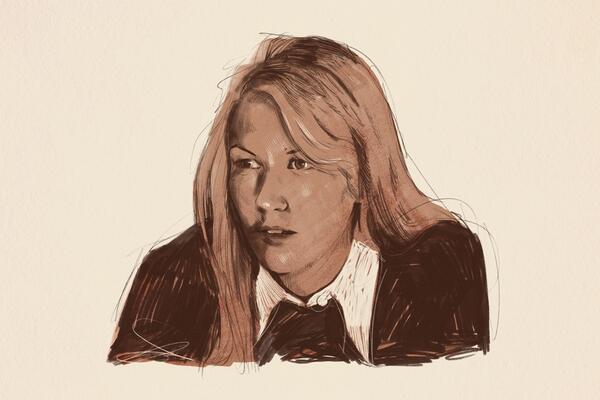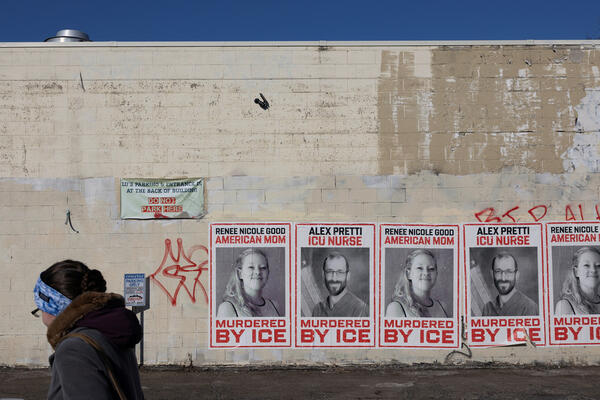
In Minneapolis, the places where Renee Good and Alex Pretti were killed by federal immigration agents have become sacred ground. People have returned to those sites with candles, signs, prayers, and grief. As far as community members are concerned, these memorials serve to remember those killed and what they stood for. But a memory doesn’t keep itself alive.
In November 2025, I was standing in a Home Depot parking lot in Monrovia, Calif., when I saw just how easily a memory can be lost. Cars moved in and out. Shoppers loaded plants into their trunks. Traffic flowed toward the freeway on-ramp just beyond the lot. Nothing about the scene suggested that a man named Roberto Carlos Montoya Valdez had recently died there after fleeing an immigration raid, struck and killed on the 210 freeway. Commerce resumed, routine returned, and the ground absorbed a human life without leaving any visible trace of what had happened.
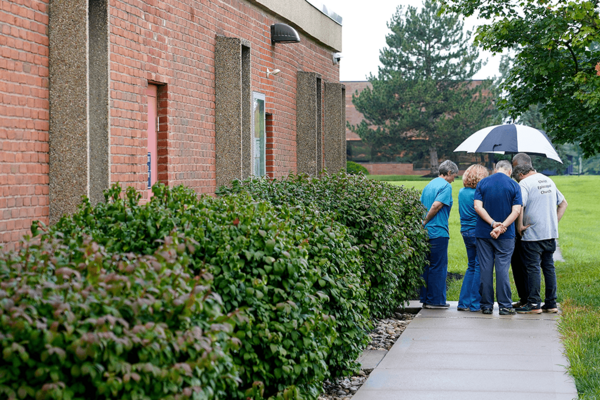
That’s why we were there. As an organizer with LA Voice, a multifaith and multiracial community organization in Los Angeles, I joined a coalition of faith and labor leaders to stage a protest inside that Home Depot, calling out Home Depot’s silence about the ICE raids happening on store property. We led a procession into the store, bought hundreds of ice scrapers with coins, and then immediately returned them. In an effort to prevent Carlos’ death from disappearing into the ordinary churn of life, we sought to interrupt commerce by clogging the system. I didn’t have language for it then, but I see it more clearly now: That action was both a protest and a consecration.
A consecration is what happens when people insist that a place marked by loss (or sacrifice, or blessing) cannot remain neutral. It’s the act of naming and refusing to move on as if nothing has changed. And in a moment when state violence is accelerating, and public attention is being overwhelmed, remembrance is not just symbolic. It’s a form of public resistance.
READ MORE: To Stop ICE Killings, More Christians Need to Tell the Truth
As a faith-based community organizer, I often focus on the stories we tell ourselves. These stories can focus on the individual, the collective, or our specific cultural moment. They teach us what to tolerate, what to ignore, and what we ultimately treat as normal and moral.
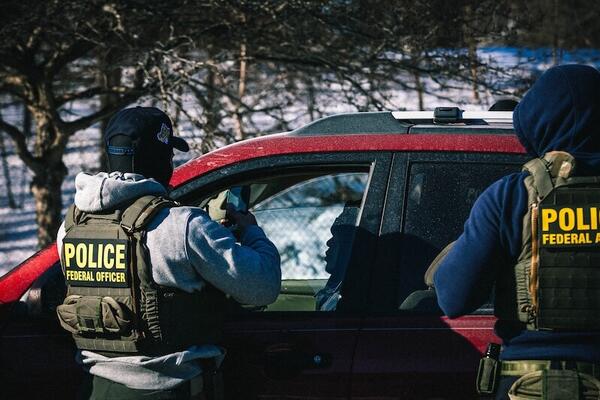
Right now, the Trump administration is trying to impose its own story: that those who resist ICE are “domestic terrorists,” and that ICE agents, not the public, are the ones in danger. In the face of these false stories, people are coming together to push back by remembering the lives of Pretti, Good, and countless others who have been affected by ICE’s brutality. In my community in Los Angeles, one of the many who has largely been forgotten in the media is Keith Porter Jr., a 43-year-old Black man and father of two who was fatally shot on New Year’s Eve 2025 by an off-duty ICE agent under suspicious circumstances. And while the Department of Homeland Security and ICE attempted to disparage Porter’s character, family and friends who knew him have kept his memory alive through protests, vigils, and stories. Whose deaths are remembered and how quickly we move on matters because forgetting has become a tactic of this administration.
The Trump administration’s relentless barrage of immigration enforcement actions, policy shifts, and online messaging is making violence and fear feel routine. One news alert replaces the last before there is time to absorb the human cost. This is not accidental. Authoritarian power depends on exhaustion and the steady erosion of moral attention. And when people are overwhelmed, brutality becomes background noise, and reality becomes obscured.
The issue is not just that the headlines are hard to keep up with. It’s the fact that the official narrative that follows is often blatantly contradicted by the images we all see with our own eyes. Escalation. Acceleration. This is why consecrating spaces of tragedy is necessary. It’s a form of public truth-telling that refuses to let power control the story by rooting the memory in moral seriousness. The ground itself bears witness.
Scripture offers an example of this. In the Book of Exodus, Moses does not set out in search of holy ground, but he stumbles upon it while tending sheep. A bush burns without being consumed, and Moses is told to remove his sandals. The ground becomes holy, not because it was designated as such, but because something irreversible had occurred there that demanded attention. Only after Moses pauses, listens, and remains still at that holy site does he receive his commission. He returns to Egypt and confronts the system that had made suffering and oppression normal.
Similarly, after the murder of his friend and priest, Rutilio Grande García, Archbishop Óscar Romero received his commission to confront the systems that were making the people of El Salvador suffer. During the Salvadoran Civil War, the government and U.S.-allied forces carried out widespread violence and repression while denying its scale and muddying the truth in public. People lived with fear, rumors, and the pressure to keep their heads down.
In that atmosphere, Romero’s weekly sermons became more than spiritual encouragement. They became one of the few places where public reality could be spoken about plainly. He read the names of the disappeared and reported what authorities refused to admit. That act served more than one purpose: First, it was a kind of public burial when families of the disappeared were denied closure. Second, Romero openly talking about the government’s repression protected the public from being manipulated. Romero insisted that people had a right to know what was being done in their country and in their name. Speaking out became a way to resist; it refused the state’s attempt to turn terror into ordinary life. Like his friend, Romero was murdered for speaking out on behalf of the poor. He was shot and killed on March 24, 1980, while celebrating Mass at the Hospital de la Divina Providencia. Today, that chapel has been consecrated to the memory of St. Romero.
Sacred ground is all around us. The question is whether people of faith will help steward memory, truth, and accountability when the country is being trained to move on.
READ MORE: The Nation's Violence Is No Longer Private
To be sure, some people will only pay attention when a victim of state violence fits their idea of innocence or relatability. But that’s precisely the moral danger of authoritarianism. These systems train the public to sort human lives into categories of credibility. Consecration refuses that sorting by insisting that a life does not need to be personally legible to deserve remembrance.
We must be clear about the urgency of the moment. The machinery of authoritarianism is in motion and escalating. Federal immigration enforcement budgets are being fortified and supercharged through the Congressional appropriations cycle. And while congressional Democrats have expressed a desire to rein in the Department of Homeland Security and ICE specifically, the Trump administration has shown no intention of slowing down its immigration crackdown. Human life and dignity have been trampled in the tracks of such machinery, and we must make that ground sacred. Neighborhood streets, parking lots, car washes, and unassuming detention facilities are places that now carry memory and weight that should not be ignored or explained away.
I feel the temptation to resist remembering. When stories of ICE assaults surface and disappear in my news feed, I feel a sickening dread. I can sense how quickly I want to scroll away and forget I saw it. The repetition dulls me. What once felt intolerable begins to feel familiar. In those moments, I feel the need to scrape away the spiritual plaque that builds when indifference feels like the only way to stay sane. But if we want to survive this moment without surrendering our conscience, it will require that we refuse to look away and instead work to remember.
Sacred ground is all around us. The question is whether people of faith will help steward memory, truth, and accountability when the country is being trained to move on.

Colin Martinez Longmore is an opinion writer for the 2026 Sojourners Journalism Cohort.
Did this article have an impact on you? Tell us how! Whether you’re moved to take action, have a question, or want to share a comment (good or bad), we value your feedback!