I have never felt so alone as when I was caring daily for my father, who has advanced dementia. It wasn’t that I was actually alone. I had a loving family surrounding me, including my mom and brother; we had weekly care plan meetings where we would try to understand my dad’s patterns, his growing agitation, and what we might do to ease his suffering and sustain our village of care.
But even with that loving collaboration—more than most people have when they are in the throes of caring for loved ones with dementia—we felt deeply isolated from the wider world. A neighbor we’d never met came and knocked on our door one day, chastising my mom for not keeping better track of my wandering dad. The cashier at the local natural food store looked angry as my dad grabbed a day-old muffin and began unwrapping it before we’d paid for it. (He’d lost all sense of the norms regarding paying for things.) Bringing him with me on errands was the only way I could manage it all as a “sandwich generation caregiver” (a popular shorthand for caring for children and aging parents at the same time), and yet I knew that his presence would complicate everything and leave me even more depleted.
It was when we were surrounded by the people in our local Unitarian Universalist Church that I felt I could finally rest beside him and not worry about what judgments might be passed on his quirky behavior or my palpable exhaustion. One of the last things my dad retained was his love of music, and as he listened to the soaring sounds of the choir or a contemplative piano tune, he would relax in his seat. I relaxed beside him. I felt fed by the sermons and got teary at the beloved community surrounding us. I was grateful to be in a place where other people’s vulnerabilities and struggles weren’t hidden but held collectively.
It was a fitting place for my dad and me to exhale. After all, one of our favorite things to do together since I was a little girl was to explore existential questions. My dad was raised Catholic, but never felt at home there. When he discovered Buddhism in his 20s, he settled into a lifelong meditation practice, eventually reconnecting with Christianity via the “red-letter Bible” and his devotion to the teachings of Richard Rohr. My dad was a seeker, as am I, and we loved to talk about justice and spirituality on road trips and hikes.
I was so grateful that this church became our safe place, but I wished so much that the grace that we felt there was more common in the wider world. Of course, we industrious, independent Americans are scared of confronting the realities of aging and dying, the ego death of cognitive illness, and the inevitability of dependence. So it makes some sense that when our loved ones get sick, we tend to keep them out of public view.
But when we acquiesce to societal fear, we perpetuate a cycle: We stay home so our loved ones—whom we are taking care of—stay home, and the isolation continues unabated. This isolation perpetuates the sense of shame and secrecy that so many people with cognitive decline and their loved ones feel, as if we have done something wrong.
As chaplain Lynn Casteel Harper writes in her beautiful book, On Vanishing, “We seem to have placed dementia beyond the scope of ordinary human imagining, as if this condition alone reveals some nasty, shameful secret: the ease with which we all may disappear.”
We need to bring dementia and Alzheimer’s disease out into the streets. We need to create more spaces for the 7.4 million people who have been diagnosed with this disease, and those of us who are caregivers can be in public. This would not only allow us to interact with others who are going through a similar experience, but it would also encourage broader awareness and acceptance from the public.
We need to bring dementia and Alzheimer’s disease out into the streets. We need to create more spaces for the 7.4 million people who have been diagnosed with this disease, and those of us who are caregivers can be in public.
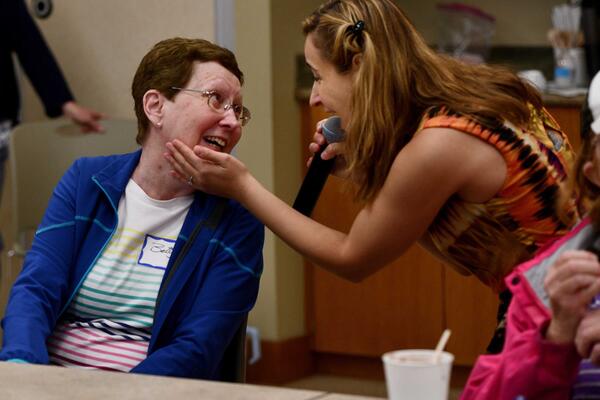
There are some promising initiatives in this regard, like Memory Cafes, which are self-organized gatherings where people with memory challenges and their caregivers can hang out and talk with the shared expectation that things might get weird and wonderful. To date, there are more than 600 Memory Cafes throughout the country.
There is an increasing number of collective arts experiences designed around people with cognitive illnesses, like MacArthur winner Anne Basting’s TimeSlips, which has staged incredible adaptations of Homer’s Odyssey with elders and their caregivers. There is also the Giving Voice Chorus, which organizes group singing opportunities for people with dementia and their caregivers.
Reimagining Dementia, an organization focused on ending the “cone of silence” around dementia, has an annual “Taking It to the Streets” campaign, where they invite people all over the world to take over public space and talk openly—potentially even joyfully—about cognitive illness.
To be sure, caregivers need private support groups, where they can find much-needed solidarity with other caregivers and speak the unspoken in a safe space. And people, particularly those newly contending with a cognitive diagnosis, need access to culturally and spiritually attuned care as they process what is happening to them and grow increasingly dependent. But it’s not just support behind closed doors that we need; it’s a massive “coming out” of people with these common and complicated diseases and their families. Just as disabled folks have taken up public space and made clear that they are not ashamed of their bodies or minds and are entitled to spaces that serve them, people with dementia and Alzheimer’s need to know they have done nothing wrong, they are not lesser than, and they deserve dignity.
READ MORE: My Disabled Body Proclaims the Gospel
The need for a public awakening around dementia and Alzheimer’s is only going to get bigger and bigger in the years ahead. My dad, an old hippie, used to joke that his generation meant to change the world, but instead just got rich. By 2030, all of the Boomer generation will be over the age of 65. It’s time for this generation and their adult children to take to the streets again to encourage society to acknowledge that dementia is rampant, incredibly painful, but also full of sacred lessons about awe, consciousness, and unconditional love.
Outside of birthing and caring for my children, the only other thing that has taught me similarly invaluable lessons about life and what some call God is caring for my dad as he approaches death.
One time, as I was walking with my dad in the neighborhood, he marveled at the height of a tree and said, eyes wide with genuine awe, “I have no idea how this got here.”
“Neither do I,” I admitted to my dad.
Of course, this tree came from a seed, but who planted it? When did they plant it and why? Or was it an accident of nature? A divine intervention? A flood of questions followed from my dad’s glitching brain, and I knew it was a blessing to see even one random tree anew through his eyes.
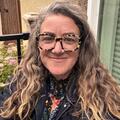
Courtney E. Martin is the author of many books, most recently Learning in Public: Lessons for a Racially Divided America from My Daughter's School. She writes about care, justice, and the human condition weekly through the Examined Family newsletter.
Did this article have an impact on you? Tell us how! Whether you’re moved to take action, have a question, or want to share a comment (good or bad), we value your feedback!