It’s tough to know what to do as a mainline Protestant pastor these days.
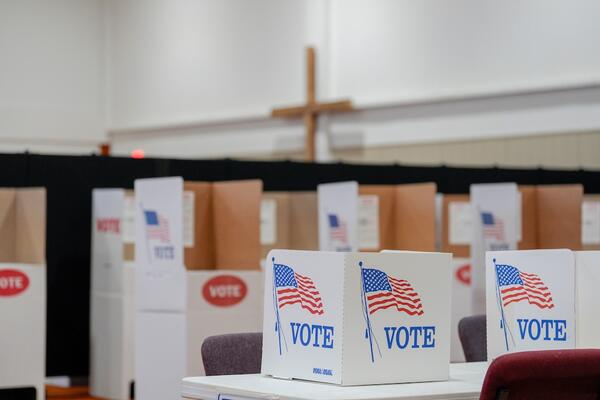
Most of the news about churches has not been good. A recent article in The Hill by Rev. Jennifer Butler, Presbyterian minister and CEO of the nonprofit Faith in Democracy, made the case that mainline Protestants are the swing voters of the 2026 elections. It’s safe to say that mainline Protestants are at a crossroads, and how they handle this election will have ramifications for years to come.
It’s nothing new to say that mainline Protestants are at an inflection point. Churches have been losing congregants for decades, and institutions big and small have made hard decisions, especially since the COVID-19 pandemic. Experts now predict that about 100,000 churches will close or be repurposed in the next decade. As early as 1972, legal scholar Dean Kelley, in his Why Conservative Churches Are Growing, made the case that mainline Protestants were in crisis, and ever since then people have been predicting the imminent demise of mainline Protestantism. Conservatives—in particular—have had a field day insisting that the reason mainline Protestantism is declining is that, as one writer puts it, it has “lost interest in the transcendent truths of Christianity and married the spirit of the age generations ago.” And yet, despite this, these denominations and congregations remain, with white mainline Protestants still making up about 13% of the United States population.
While directly impacting how mainline Protestants and their critics think of these institutions, those critiques are mainly inward looking, but there is also evidence of a rupture in the public facing ministry of mainline Protestants. These denominations have long been considered liberal, and a majority of them have endured splits over issues pertaining to LGBTQ+ acceptance. But while it might be true to say that mainline traditions have a more progressive perspective on gender and sexuality, it must also be said that 58% of white nonevangelical Protestants voted for President Donald Trump in 2024. According to polling from September, after the Trump administration’s dehumanizing immigration crackdown, 41% of white mainline/nonevangelical Protestants said they were in favor of the use of internment camps for undocumented Americans—the same as among all Americans. A look at the data suggests that a little under half of white mainline Protestants are Republican.
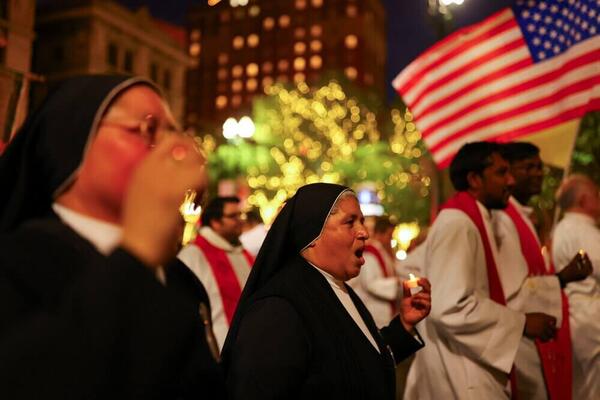
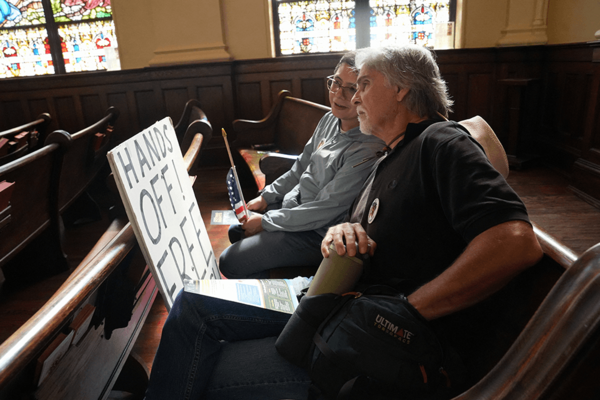
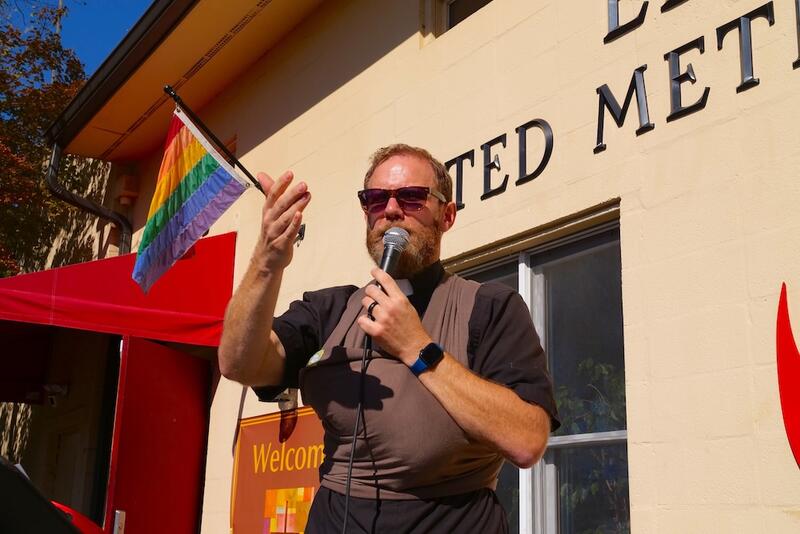
As we enter a midterm election, the issues currently vexing mainline traditions put pastors in a tough position. In the clergy groups that I attend, I often hear that many wish to address the issues of the day or even preach sermons about democracy, election integrity, or the rise of authoritarianism, but they are afraid to do so because they are unsure how their congregation will receive the message. Worse, those same pastors tell me that, in such an unstable time, they are worried about losing members as congregants sort themselves according to politics. As political scientist Ryan Burge argues, the demise of the purple church is bad for our democracy, but I have also found that it weighs heavily on the minds and hearts of pastors. When it feels like the church is on defense, it is hard for many pastors to risk alienating the members they have left.
nashville-pastor-voting.JPG
With all the pressures, what can mainline Protestants do as we enter a tumultuous election cycle that, like many before it, has been called the most consequential in a generation?
First, mainline Protestants have endured distinctively not because they are theologically moderate, but because they encompass theological and political breadth and depth. For example: In my denomination, the American Baptist Churches USA, if you were to attend two different church services, you might have two different worship experiences—even though it is a single, mainline denomination. I think that is a good thing.
Especially in this time period, it can be easy to dismiss the blessing that is diversity of opinion and worship. That diversity is a part of our strength. The ability to remain in fellowship with one another across lines of difference is, itself, a theological commitment that witnesses to our world at the present time. Of course, remaining in fellowship across political differences does not mean that every position is equally defensible, and pastors must be willing to say so.
But at the same time, diversity of opinion is not an excuse to stay silent in this current moment. The fact that our congregations contain diverse viewpoints doesn’t mean that we should shy away from using the gospel to critique political power. One of the great things about these traditions is that they offer a diverse way of talking about the issues that matter, and these denominations have been talking for a long time. Mainline Protestants were a key part of supporting Civil Rights, nuclear disarmament, and, more recently, proclaiming the sacred dignity of people in the face of Immigration and Customs Enforcement’s brutal racism. Lutherans may talk about these issues differently than Methodists, but all these traditions possess a language that speaks forcefully about the role that we have in society and the necessity of acting to create a better world.
Finally, mainline Protestants may have to let go of their institutional mindset in order to follow the spirit. To some extent, all pastors are institutionalists, even if reluctant ones. We serve human beings within the frameworks of congregations, denominations, synods, dioceses, and whatever other terms we come up with to describe our work together. At the same time, God may be leading us outside of these institutions into a new world. I have lost count of the meetings that I have had where people wrung their hands in anxiety about what the future holds. In some ways, I feel blessed to have never witnessed these mainline churches in their heyday. For me, mainline Protestantism has always been in decline. There is real grief work to be done here and, after that, we must face the future while refusing to grasp it too tightly.
Whatever the future may hold, I know that God will continue calling people to be in relationship with one another and to uphold God’s call for us to honor each other. Pastors don’t need to become partisan operatives to speak about democracy, human dignity, or the treatment of immigrants. What they really need is to become more engrossed in what made their traditions distinctive in the first place and to trust that these traditions still have something to say, no matter who is there to hear it.
As we enter a midterm election, the issues currently vexing mainline traditions put pastors in a tough position.

Did this article have an impact on you? Tell us how! Whether you’re moved to take action, have a question, or want to share a comment (good or bad), we value your feedback!