On April 12, President Donald Trump shared an AI-generated image that seemed to depict him as Jesus Christ. There was immediate backlash, even among those who have been Trump’s staunchest allies. “This should be deleted immediately,” wrote Trump ally and conservative activist Sean Feucht on social media. So severe was the backlash that Trump deleted the post.
Later, Trump denied he was portraying himself as Jesus, saying that he thought it showed him as a “doctor.” Still, many were quick to denounce his actions as a bridge too far. What seems most clear is that Trump’s sharing of the image caught many by surprise.
But as someone who has watched this president over the past decade, I thought his sharing of the image was consistent with how he has always viewed himself: as a messianic figure. Here are four times that Trump has presented himself as a savior, chosen by God, or the king of kings.
1. “I Alone Can Fix It”
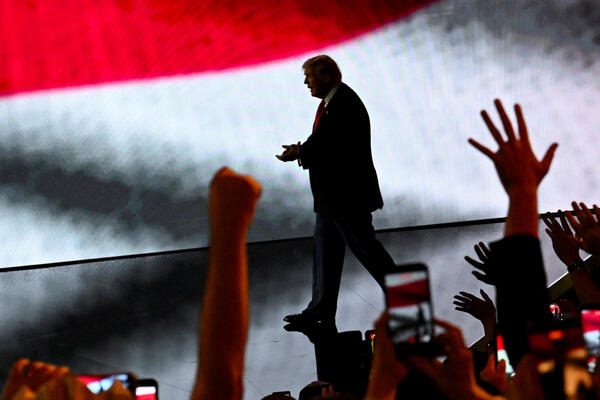
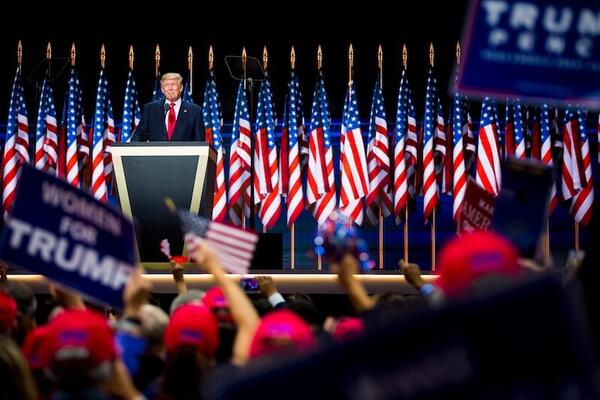
Standing on a stage in Cleveland in 2016 at the Republican National Convention to accept his nomination as the GOP candidate for president, Trump uttered what would become one of his signature claims: “Nobody knows the system better than me, which is why I alone can fix it.” What is most stunning about such a claim in our politics is that Trump asked Americans to trust him above anyone else—not each other, not God, not the forces of goodness or mercy or kindness, but a singular figure.
Messianic figures throughout history have often presented themselves as singular, insisting that they alone can solve the political and cosmic issues that we face. Of course, Jesus was the ultimate messianic figure, being the only one who has extricated us from the fallen nature of our world. So, when we hear such claims from our politicians, we ought to be alarmed. No matter how powerful they are, they are not infallible, and they must ultimately be accountable to the people.
2. “I Am the Chosen One”
In 2019, when Trump was in his first round of trade wars with China, the president said that somebody had to “take on” China, and that he was the man chosen to do it. During his remarks, he looked toward the heavens and proclaimed, “I am the chosen one.” While he later tried to downplay the remark in his typical manner, the comment reveals that he believed that God had chosen him as a special man of destiny.
The claim that he had been elected by God showcases a spectacular sense of ego and reflects a central claim of messiahship. When Trump was asked by The New York Times what constrained his global powers, he answered in a way that revealed the self-aggrandizement of someone who believes they embody a divine purpose: “My own morality. My own mind. It’s the only thing that can stop me.”
3. “We Saved America”
President Trump has cast his latest election victory as a salvific act. Speaking in December 2025, he characterized his victory in the following way: “But just over 1 year ago today, with your help, we saved America. That’s what happened. We saved it. The most important election victory possibly in the history of our country. Our country was going down. We were a country that was being scoffed at, laughed at all over the world.” When paired with his Jan. 6, 2021, “Save America” rally and his promise to seek “retribution” during his second term, we can see that Trump does not just consider himself a politician, but the savior of this country.
READ MORE: How Pope Leo XIV Understands His Role in Politics
One can see the danger of this sort of thinking in a post shared by the president on Truth Social: “He who saves his Country does not violate any Law.” Trump did not come up with this. He was quoting the French politician and military leader Napoleon Bonaparte, who would eventually declare himself emperor in 1804. To cast yourself as a savior does not simply mean that you view yourself as important; it means you believe laws do not apply to you. Trump’s claim to be a savior is a way for him to claim that he is above the law.
To cast yourself as a savior does not simply mean that you view yourself as important; it means you believe laws do not apply to you.
4. “They call me king now. Can you believe it?”
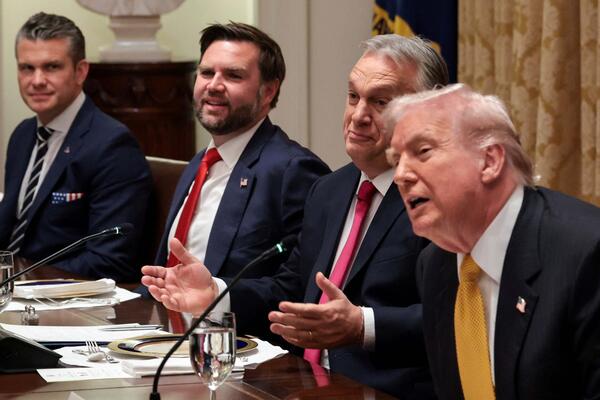
At the White House’s Easter commemoration, the president gathered with faith leaders, including Paula White-Cain, who is perhaps his closest faith adviser, and spoke of Jesus’ triumphant entry into Jerusalem, saying, “On Palm Sunday, Jesus entered Jerusalem as crowds welcomed him with praise honoring him as king,” before adding with a smile, “They call me king now. Can you believe it?”
If this direct comparison to Jesus was not troubling enough, White-Cain went even further, comparing the story of Jesus’ death and resurrection directly to the president’s political odyssey: “Jesus taught so many lessons through his death, burial, and resurrection. He showed us great leadership, great transformation requires great sacrifice. And Mr. President, no one has paid the price like you have paid the price. It almost cost you your life. You were betrayed and arrested and falsely accused. It’s a familiar pattern that our lord and savior showed us.”
Such direct comparisons presage the latest bout of confusion between Trump and Jesus through the image he posted this week. It’s not new; it’s part of a pattern of thinking that has been present both in the president and the faith leaders he surrounds himself with.
***
Christians only have one savior, and his ministry was characterized by love, forgiveness, and mercy—traits that are in short supply as Trump continues to brutalize Iran.
And again, for those who may have been surprised by Trump sharing the image of himself as the Great Physician (Mark 2:17; Luke 5:31), this is not new. Consider how Trump speaks about himself in his 1987 book, The Art of the Deal:
“The final key to the way I promote is bravado. I play to people’s fantasies. People may not always think big themselves, but they can get very excited by those who do. That is why a little hyperbole never hurts. People want to believe that something is the biggest, the greatest and the most spectacular.”
History has shown us that humans can be easily tempted by claims of power, but Christians know that what saves us can never come in the form of domination, ego, raw power, or bravado. Such claims only serve to elevate someone above the law, and we must push back against both politically and spiritually. We cannot accept political power as divine authority because we are not awaiting a savior. That savior has already come, and he has shown us that the path forward is paved with humility and love.
[Editor's Note: This article was corrected on April 16 to reflect that President Donald Trump posted the AI-generated meme on April 12, not April 13 as originally stated.]

Did this article have an impact on you? Tell us how! Whether you’re moved to take action, have a question, or want to share a comment (good or bad), we value your feedback!