These days, it’s rare for a political speech to capture my imagination. But a few months ago, Canadian Prime Minister Mark Carney spoke at the World Economic Forum declaring with moral clarity and candor that there’s been a “rupture in the global order” tied to a “brutal reality” where the strong can act without constraints and the weak must endure the consequences. While Carney didn’t explicitly mention his own Catholic faith, his speech was a timely and compelling articulation of how to apply a Jesus ethic to our increasingly dangerous global politics under President Donald Trump’s disastrous foreign policy.
The problem Carney is diagnosing here is not just political, but deeply theological. Unconstrained might that seeks to dominate the weak is precisely the antithesis of the ethic Jesus models and demands of nations. In Jesus’ parable of the sheep and the goats, nations are judged alongside individuals based on how they treat the most vulnerable members of society (Matthew 25:31-46). Even more pointedly, Jesus makes it clear that how nations and individuals care for the most vulnerable is how we care for Jesus himself.
Matthew 25:31-46 is also a lesson about interdependence, whether it’s the interdependence of people in a local community or in the community of nations. In our interdependent world, our security and prosperity are inextricably tied to the welfare and security of the rest of the world.
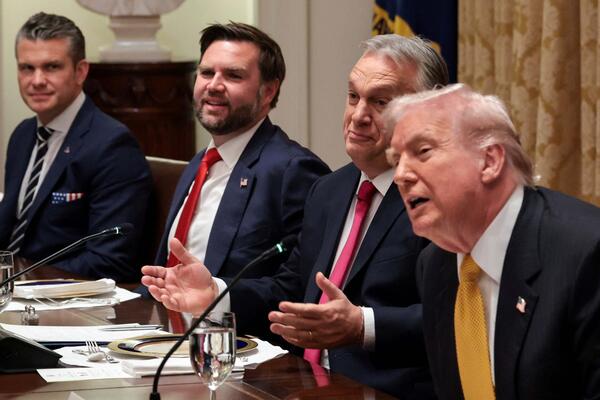
In stark contrast to Jesus’ teachings of humility, servant leadership, and compassion, Trump’s foreign policy in this second term has been defined around a “go-it-alone” and “might-makes-right” philosophy that denigrates interdependence. That rejection is both unbiblical and self-defeating.
READ MORE: Proverbs Gave Me a Better Way to See Trump’s Iran Deal
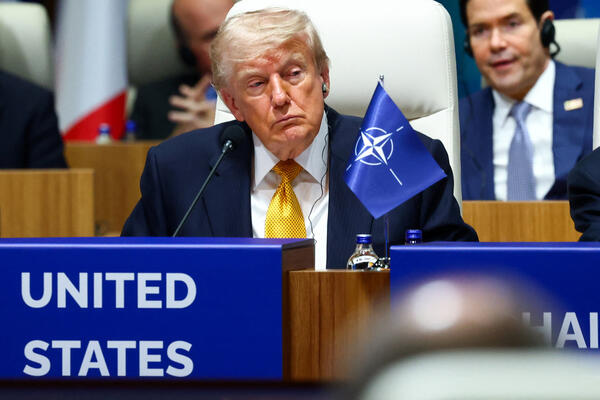
There are plenty of examples of what this foreign policy approach looks like in practice. For example, at this past month’s NATO summit, Trump threatened to cancel all trade with Spain because the Spanish government has refused to commit to NATO’s new defense spending target. He also reiterated belligerent threats to seize Greenland from Denmark. This approach often follows a pattern of belittling and marginalizing allies, treating weaker nations as vassals rather than partners, and seeking to advance a myopic version of our nation’s interests through coercion and transaction rather than persuasion or cooperation.
This pattern has shown up in everything from the president’s tariff regime to his tepid and erratic support of Ukraine to his illegal military action in Venezuela. There are many other examples I could reference, but two in particular are worth unpacking in more detail.
At the end of February, Trump launched a war on Iran in violation of both international law and basic morality that was opposed by all our traditional allies except Israel. On the first day alone, weapons paid for with our tax dollars killed more than 100 schoolchildren, among the thousands of lives lost across the conflict. The war’s goals were inconsistent and arguably unachievable from the start, and it quickly became a costly quagmire: harder-line leaders now control Iran, and the prospect of a nuclear-free Iran is more distant than ever.
The financial and strategic costs have been sobering. The U.S. has already spent an estimated $25 billion on the war, and the Trump administration is pursuing one of the largest military spending increases in U.S. history—a staggering $1.5 trillion—even as it has squandered our soft power, and our traditional alliances. This go-it-alone and might-makes-right mindset has left this administration ill-equipped for reacting to modern warfare tactics, as Iran’s use of drones, asymmetrical warfare, and closure of the Strait of Hormuz is demonstrating.
Our response to the Ebola crisis in the Democratic Republic of the Congo is another recent example. Since the U.S. pulled out of the World Health Organization and withheld its dues to various United Nations organizations, it has been relegated to the periphery of the global response to the Ebola crisis. Trump’s hostility to multilateral cooperation has cost lives in the DRC and put other countries in the region—and potentially across the world—in danger. This failure is compounded by the reckless dismantling of USAID and draconian cuts to U.S. global health programs.
Both of these examples illustrate why Trump’s “go-it-alone, might-makes-right” foreign policy is not just self-defeating but contradictory to Jesus’ love for the entire world, made plain in John 3:16. “Might makes right” also betrays the frequent calls by the biblical prophets to pay particular concern for the most vulnerable and marginalized. This commitment does not end at our borders.
Scripture also warns us against hubris. There are countless verses warning against pride and arrogance, including Romans 12:3, which says, “For by the grace given to me I say to everyone among you not to think of yourself more highly than you ought to think, but to think with sober judgment, each according to the measure of faith that God has assigned.” It’s hard to see how our callous isolationism has damaged the global response to the Ebola crisis without thinking of Paul’s metaphor comparing the church with the human body. Different people have different gifts, Paul explains, but all are deemed vital and interdependent because “if one member suffers, all suffer together with it” (1 Corinthians 12:12-27).
Mark Carney concluded the French portion of his speech at Davos with a hopeful corrective:
“On the other hand, I would like to tell you that the other countries, especially intermediate powers like Canada, are not powerless. They have the capacity to build a new order that encompasses our values, such as respect for human rights, sustainable development, solidarity, sovereignty and territorial integrity of the various states.”
I believe that Carney’s corrective also offers hope and inspiration for Americans. Despite the increasingly imperialistic America First foreign policy of the Trump administration and what has largely been capitulation by the Republican controlled Congress in response, we too are not powerless. We can and must offer an alternative vision for our nation’s role in the world.
One hopeful example of that alternative vision is our tireless advocacy to pass a war powers resolution on the Iran war. We helped pressure members of the House of Representatives to overcome Speaker Mike Johnson’s intransigence. And then, on June 24, both chambers passed a war powers resolution directing Trump to withdraw U.S. forces from hostilities in Iran was passed. The resolution marked a rare rebuke of the president and reaffirmed Congress’ constitutional authority to serve as a check and balance on the executive branch.
Ultimately, when we look at the Trump administration’s isolationism and imperialism, we must identify it as not just ineffective and counterproductive but as deeply unchristian. Scripture reminds us that we are fellow members of a global body, one where “if one member is honored, all rejoice together with it.”
Unconstrained might that seeks to dominate the weak is precisely the antithesis of the ethic Jesus models and demands of nations.

Rev. Adam Russell Taylor is president of Sojourners and author of A More Perfect Union: A New Vision for Building the Beloved Community. Follow him on Bluesky @revadamtaylor.
Did this article have an impact on you? Tell us how! Whether you’re moved to take action, have a question, or want to share a comment (good or bad), we value your feedback!