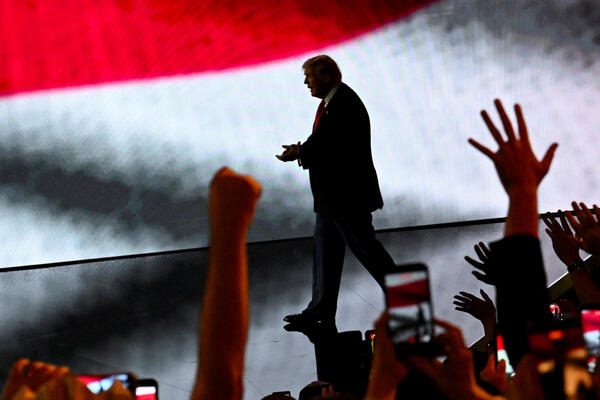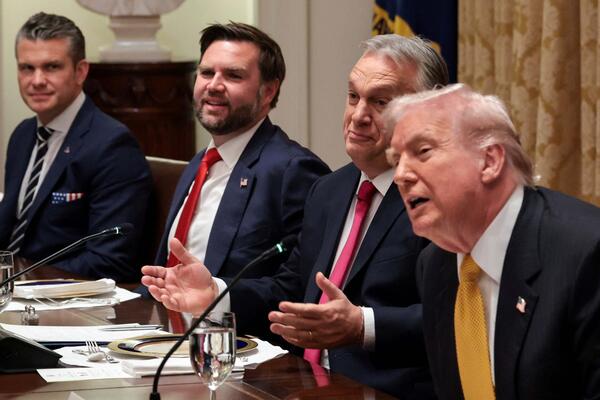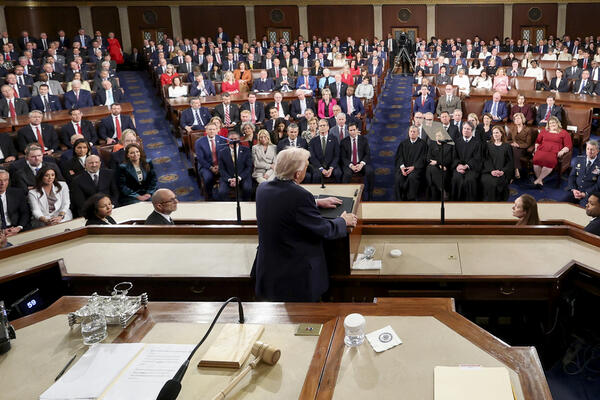
I thought about skipping President Trump’s State of the Union address, but out of a sense of civic duty—or perhaps misplaced hope—I watched it anyway.
In what became the longest such address in U.S. history, Trump’s joint address to Congress devolved from political theater into vicious partisan baiting and derision. When he wasn’t attacking his political opponents, Trump offered a barrage of lies about the state of the economy, racist scapegoating of immigrants, and his first-year record. But to me, the most dangerous lie in Trump’s speech was what he said about the upcoming midterm elections.
During his speech, Trump doubled down on the conspiracy theory that “cheating is rampant in our elections” and repeated his claim that “the only way they”—i.e., Trump’s opponents—“can get elected is to cheat.” These claims served as a pretense for his argument that Congress must “approve the SAVE America Act to stop illegal aliens […] from voting in our sacred elections.”
As Christians who care about the health and future of our democracy, we cannot afford to ignore Trump’s rhetoric—or the actions that preceded it.
As Christians who care about the health and future of our democracy, we cannot afford to ignore Trump’s rhetoric—or the actions that preceded it.
Trump’s remarks follow efforts by his administration and congressional allies to restrict who can vote, asserting greater control over the midterm elections. For example, the Senate is currently debating the so-called SAVE America Act, which would restrict ballot access by instituting onerous ID requirements, including proof of citizenship—despite the fact that noncitizen voting is exceedingly rare. The SAVE America Act is a bad policy solution to an almost nonexistent problem that would create a new one: keeping eligible voters from casting ballots. According to an analysis by the Brennan Center for Justice, more than 21 million citizens do not have a birth certificate, a passport, or naturalization papers readily available.
READ MORE: Read This Before You Compare What's Happening in the U.S. to Nazi Germany
Last week, Trump claimed he would find a way to implement nationwide voter ID in time for November’s midterms “whether approved by Congress or not!” Earlier this month, he repeatedly called for the Republican Party to “nationalize” voting in the United States—a remarkable claim not only for its naked partisanship but also for what would be a flagrant violation of the U.S. Constitution.
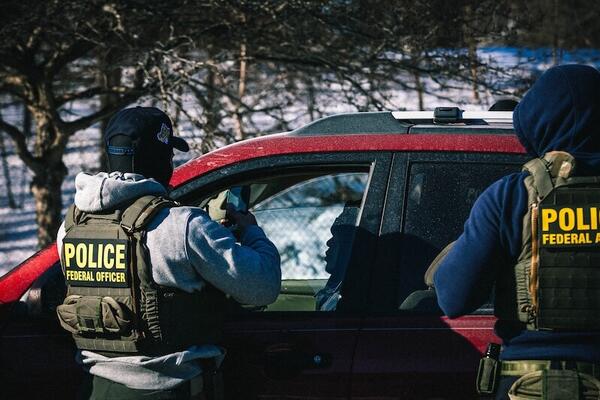
The alarming actions of his administration can also be seen in the FBI raid on the Fulton County election offices last month, which county officials allege included an unconstitutional seizure of election records. The raid isn’t just about Trump’s fixation on the 2020 election; he seems to be creating precedent to interfere when voting results don’t match his preferred outcome—which could haunt this year’s midterms.
These tactics are an attempt to consolidate power by disenfranchising perceived opponents, eroding trust in democracy, and paving the way for federal overreach into local election processes. The administration has also used "election security" rhetoric to justify voter intimidation, explore criminally charging state election officials, criminalize routine election work, and further weaken the Voting Rights Act. All this will have a chilling effect on voter participation—particularly for Black voters and other voters of color.
The president has also threatened nonprofit advocacy groups, including those that work on nonpartisan issues such as voter engagement and election monitoring. In a recent expert brief, the Brennan Center argues that Trump is “directing, dismantling, and weaponizing agencies so that the Trump administration can evade its responsibility to ensure the security of elections and the freedom to vote” and “setting the stage for election subversion.”
When I think about elections and voting rights through the lens of faith, I always start with the concept of imago dei. Genesis 1:26-27 says that God created human beings in God’s own image and likeness. While democratic systems are always imperfect, I still strongly believe they provide the best way to honor and affirm every person’s dignity, prevent the abuse of power, and advance the common good. Voting is our voice; it’s what lends our democratic system its legitimacy and what enables us to hold our elected officials accountable.
Last week, I joined more than 400 national Christian leaders from across traditions and backgrounds in underscoring the urgency of this moment. In “A Call to Christians in a Crisis of Faith and Democracy,” we warn:
“Freedoms and rights once assumed to be secure are being stripped away, redefined, or selectively applied. Decades-old civil rights protections are being dismantled. Truth is being replaced by lies and propaganda. Governance is being hollowed out and replaced with corruption, loyalty tests, intimidation, and the normalization of lawlessness. The architecture of democracy and the rights secured by the separation of powers are being eroded from within, while we are told to accept it as law’, ‘order,’ or ‘God’s will.’”
We ended the statement—which is now open for individual sign-ons—with a series of Lenten commitments, including the commitment to honor the image of God in every voter, which leads us to “defend the right to vote, resist voter suppression and intimidation, encourage greater participation in our democratic process, and equip clergy and lay leaders to support free and fair elections.”
READ MORE: Trump's Law and Order V. the Muppets' Holy Chaos
Laws and policies that make it easier for qualified voters to vote and have their voices heard honor the divine image that dwells in every single voter. Conversely, laws and policies that make it more difficult for eligible voters to cast a ballot defile the divine image in those voters. Building on that principle, an effective and inclusive democracy is only possible when everyone, regardless of race, religion, gender, class, sexual orientation, ability, or any other characteristic has an equal say in that democracy via the ballot. So imago dei underpins our concept of what makes for a healthy democracy and why our democracy is worth both transforming and defending.
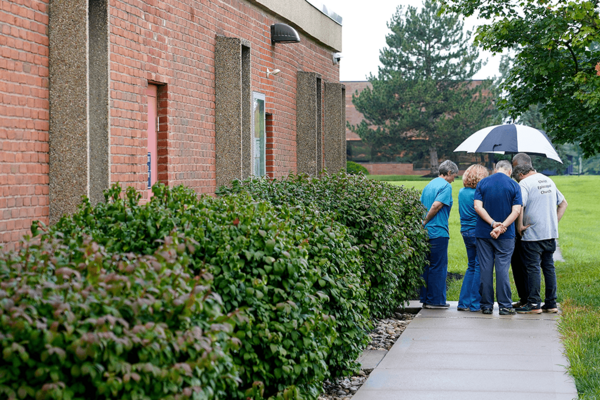
Through Faiths United to Save Democracy, Sojourners is joining the Skinner Leadership Institute and the Georgetown Center for Faith and Justice to partner with VoteRiders, ensuring that eligible voters have required IDs so they can exercise their right to vote. We are also redoubling our efforts to build relationships of accountability with election officials to ensure they conduct free, fair, and safe elections and to train poll chaplains to provide a moral presence at polling places—a safeguard against voterintimidation or violence, including by the potential presence of ICE. And in the face of mounting threats by the administration to subvert or undermine election results, we will be joining efforts to educate the public and protect election integrity.
Trump’s statements and actions around voting are just one way his administration is operating at a dangerous level of impunity. Throughout American history, midterm elections have often created accountability for the sitting administration by providing an opportunity to change the composition of Congress. A fully free and fair election this fall—one in which we respect the will of the voters regardless of the outcome—is one of the best things we can do to offer that accountability and honor God’s image in each voter.
Rev. Adam Russell Taylor is president of Sojourners and author of A More Perfect Union: A New Vision for Building the Beloved Community. Follow him on Bluesky @revadamtaylor.
Did this article have an impact on you? Tell us how! Whether you’re moved to take action, have a question, or want to share a comment (good or bad), we value your feedback!