The New York Times’ report on allegations of sexual abuse by labor organizer César Chávez has been devastating to many people, me included.
The news reminds me that long before I learned about power, faith, and movements from a church stage or a history book, I learned about them from an abuelita.
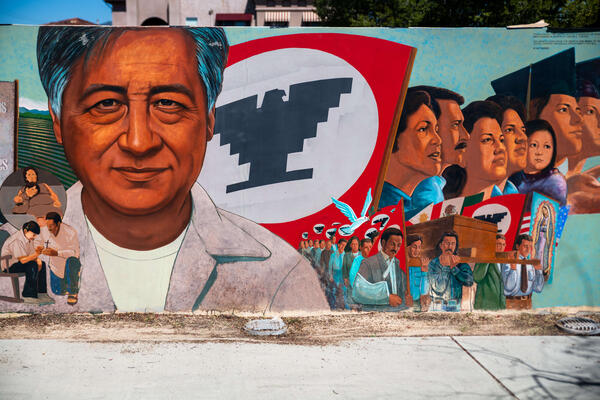
I was in seminary in Southern California when I began developing an abuelita theology, the framework that underpins my first book, Abuelita Faith. As a Caribbean Latina from Miami studying on the West Coast, I was drawn to the depth of Latino history and pride that shaped Los Angeles—its proximity to where Chávez lived and organized, and the enduring energy of liberation struggles still lingering there. I set out to research the United Farm Workers, a union which Chávez co-founded, expecting to study strategy, leadership, and nonviolent resistance.
And right there, at the center of everything, I found César Chávez’s abuelita—his grandmother, Dorotea Chávez, also known as Mama Tella.
Before Chávez became a symbol for immigrant farm workers, he was a boy formed at a kitchen table, shaped by the authority of his grandmother. She had no formal credentials and occupied no recognized platform, yet she carried stories of survival and prayers of resistance. When a priest tried to deny Chávez his first Communion because he lacked formal catechism training—his family lived too far from the city to attend—his mother, Juana, insisted the priest test him. Chávez and his sister answered every question. They were ready, not because an institution had formed him, but because his abuelita already had. The priest had no choice but to allow them to receive Communion the following day.
This story has stayed with me because it named something I had always known: Our abuelitas—the women that empire most often discards and overlooks—are the foundation of our formation. They preserve what survives: culture, language, belief, and a wisdom rarely written down yet somehow strong enough to hold everything together. What began as research into Chávez’s life became something far more personal. It became a mirror, reflecting the kind of faith I had inherited all along, the kind that doesn’t present itself as theology, but shapes entire lives nonetheless.
This pattern extends beyond Chávez. After her parents’ divorce, Dolores Huerta—who would go on to co-found UFW and co-lead the farm workers’ movement—was raised by her mother, Alicia Fernandez, a working-class woman who labored long days and nights before eventually opening a small hotel and restaurant that regularly offered free lodging to migrant workers and their families. This was critical to Huerta’s formation. Long before she stood beside Chávez, she was already organizing—founding the Stockton chapter of the Community Service Organization, registering Latino voters, leading citizenship classes, and advocating for dignity in her community. In The New York Times’ investigation, Huerta, who is now 96, said that Chávez had sexually assaulted her in the 1960s, resulting in two pregnancies—a secret she kept for 60 years.
In 1955, the same year that Huerta founded the Stockton chapter, all across the United States, Black women were serving as the backbone of the Civil Rights movement. The event that ignited it, the 1955 Montgomery Bus Boycott, was successful because of the behind-the-scenes organizing of the Women’s Political Council, led by Jo Ann Robinson. After being verbally assaulted by a white city bus driver, Robinson made desegregation a central priority. When Rosa Parks refused to give up her seat to a white passenger and was arrested, Robinson mobilized quickly. Days later, some 40,000 people walked off city buses in defiance of a system that was degrading, humiliating, and intolerable.
Abuelitas, mamas, and tias have always been the foundation of social justice movements. They carry, nurture, and sustain the very people history later names as heroes, holding communities together while others—usually men—stand at podiums. This reality exposes the lie at the center of so many of our narratives: that change is driven by singular men rather than collective care.
The accounts from the women who allege Chávez’s sexual abuse and coercion, many of them children at the time, force us to reckon not just with a man, but with the way we construct memory, legacy, and moral authority. As Esmeralda Lopez, who grew up in the union during the ’70s and ’80s, told The New York Times while recalling how she rejected advances from Chávez in April 1988—when she was 19, and he was 61—“It makes you rethink in history all those heroes. The movement — that’s the hero.” Other survivors describe the agonizing decision to speak out about Chávez’s abuse, worried about the harm it could bring to the immigrant community, which is already being threatened by the Trump administration’s strategy of mass deportation. Still, they bravely decided to speak out to emphasize that this movement was never about one man.
Every new headline about abuse—whether it names a financier, a pastor, a politician, or now, painfully, Chávez—reveals something we already know but often refuse to confront: Power is never neutral. Paired with patriarchy, it concentrates, distorts, and protects itself, silencing the most vulnerable while preying on those unable to defend themselves.
READ MORE: Dolores Huerta Among Women Accusing César Chávez of Sexual Assault
Empire and patriarchy are not abstractions; they are patterns that materially manifest in the world. They take movements rooted in collective struggle and slowly recenter them around charismatic men and individual legacies. The story becomes about him—the emperor, the ruler, the leader, the king—his vision, his sacrifice, his myth, while obscuring the people, often women, who made the work possible.
In Abuelita Faith, I write that the greatest theologians the world has ever known are those the world would never consider theologians at all. So when I hear the phrase “the movement is the hero,” uttered by Lopez, who I think can rightly be seen as an abuelita dismissed and discarded by the powerful, I am struck by her wisdom. This wisdom reorients us away from personality and back toward people, resisting the pull of patriarchy that elevates men at the expense of truth and at the expense of women and children.
Scripture has long warned us about this, though we have not always listened. Ephesians 6 reminds us that our struggle is not against flesh and blood, but against powers and systems that shape the world. And yet how often do we reduce harm to an “individual moral failure” instead of naming it what it is: the predictable outcome of unchecked power within systems designed to protect it?
We see this clearly in the story of David, as it is often told. We linger over his poetry and his repentance, softening the edges of his violence, as though it were an impulsive mistake rather than an abuse of royal power. We preserve his legacy because we’ve been conditioned to believe that it matters more than the truth.
Then there is Bathsheba, who is often blamed, minimized, or erased. When she became pregnant with David’s child, he did not apologize to her. I am struck by the parallel here between Bathsheba and Huerta’s stories. As The New York Times reported about Huerta’s pregnancies:
“Two of the children were the result of his two sexual encounters with Ms. Huerta, she told The Times, including the assault she described in 1966. Ms. Huerta said she concealed the pregnancies by wearing baggy clothes and ponchos, had the baby girls and then arranged for them to be raised by others.”
There are also parallels between David and Chávez. In both their cases, the cycles of abuse and violence continue to spiral because this is what happens when abuse is minimized, and power goes unchecked; it metastasizes. It becomes normal. It becomes culture. And still, David is remembered as a great king. Even before the bombshell New York Times story, the UFW had recorded a 1979 board meeting where Chávez can be heard verbally abusing Huerta. Despite that—and despite opposition to undocumented immigrant workers—he was still lauded as a great activist. This is what patriarchy and empire have always done: rewrite the story in a way that protects power and obscures harm. It turns systemic violence into personal imperfection and then calls it redemption.
But there is another way of organizing the world, one that predates and resists these patterns.
In When God Was a Woman, feminist thinker Merlin Stone explains that in many early civilizations, people believed that the creator of all things was female. But as patriarchal religions like Judaism and Christianity gained influence, traditions centered on female deities were suppressed.
Matriarchal structures prioritized care instead of dominance. The goal in these frameworks is not to elevate women above men, but to prioritize children—those most vulnerable, fragile, and in need of protection. Because if a society cannot protect its children, it cannot thrive. If it cannot honor those who are most easily harmed, then all its claims to greatness are hollow.
Patriarchal systems reshaped that vision, and before long, societies became increasingly militarized. God was recast as a male warrior and ruler. And if this is who God was, and men were made to be like God, then violence, domination, and hierarchy became more than acceptable—they became sacred. Reverence and care gave way to conquest. The cost of following the “strong” instead of nurturing the “weak” continues to unfold in the majority of headlines we read today, even on a global scale.
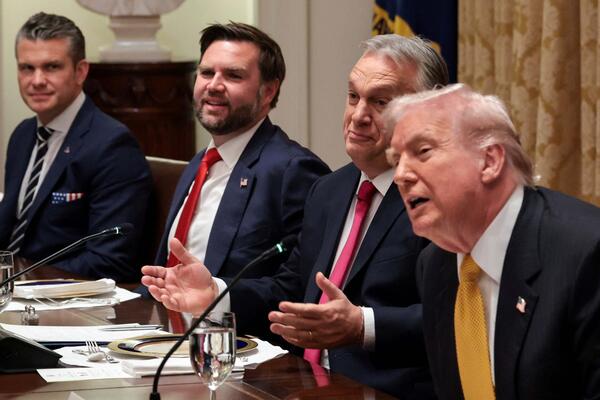
In February of this year, the cost of patriarchy and empire became tangible yet again when President Donald Trump and Israel’s Prime Minister Benjamin Netanyahu launched surprise airstrikes on multiple sites and cities across Iran. One of the first casualties was a primary school destroyed by a U.S. missile strike, killing at least 168 people, the majority of them being children. Weeks later, Secretary of Defense Pete Hegseth—along with many evangelical leaders—used apocalyptic rhetoric to justify the war. Critics have raised alarms, and with reason. This war is not “God’s plan.” But I can’t help but wonder if, in their claims, there is a sort of revelation.
In Greek, apokalypsis literally means “an uncovering.” All that’s being revealed—the rampant abuse by men, the exploitation of the vulnerable, and the violence and warfare baked into our institutions—is exactly what has always been there, shaping the world. Perhaps the “end times” are not literal, but a spotlight on the systems of domination and exploitation that patriarchal power has used to keep us from flourishing, individually and collectively.
The unveiling exposes structures that have always protected power at the expense of the vulnerable. It forces a slow, painful recognition that the stories we’ve been told—about heroes, movements, and righteousness—have often been incomplete at best and complicit at worst. Maybe the way forward is not to search for better men to lead us, but to return to the wisdom we have long overlooked: the wisdom of abuelitas. Those who have always known that movements and flourishing are hardly sustained by power and domination. What carries them forward is care and protection. Because the measure of any society is not in how it honors its heroes, but how it protects its children.
Every new headline about abuse—whether it names a financier, a pastor, a politician, or now, painfully, Chávez—reveals something we already know but often refuse to confront: Power is never neutral.

Did this article have an impact on you? Tell us how! Whether you’re moved to take action, have a question, or want to share a comment (good or bad), we value your feedback!