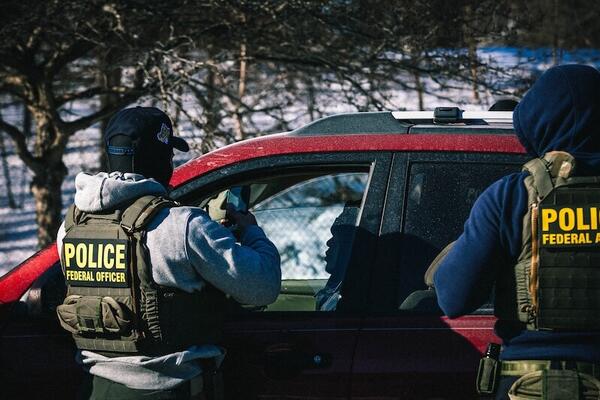
On Jan. 22, federal authorities arrested at least two organizers linked to a nonviolent protest inside Cities Church in St. Paul, Minn., that interrupted services at a congregation where one of the pastors doubles as the acting director of the Immigration and Customs Enforcement St. Paul field office.
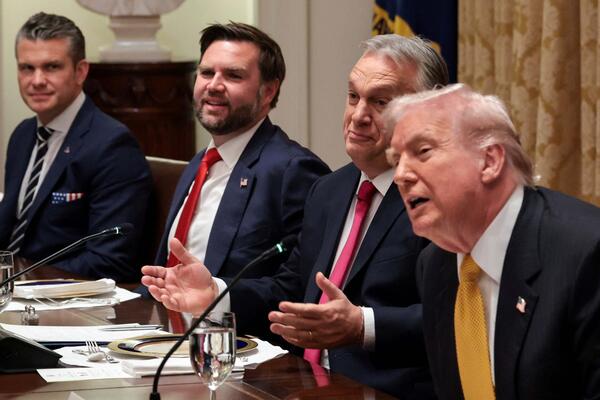
Celebrating the arrests, Attorney General Pam Bondi vowed through a post on X: “WE WILL PROTECT OUR HOUSES OF WORSHIP 🙏🏻”.
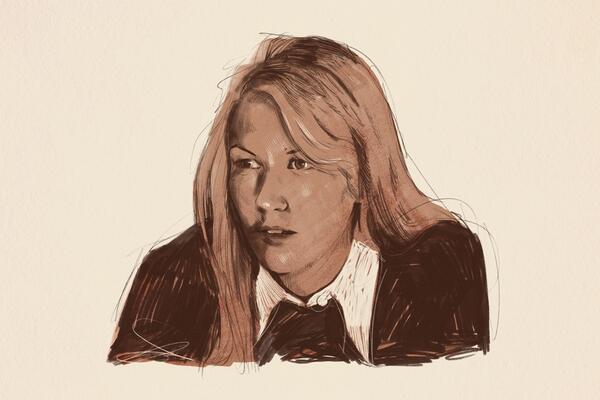
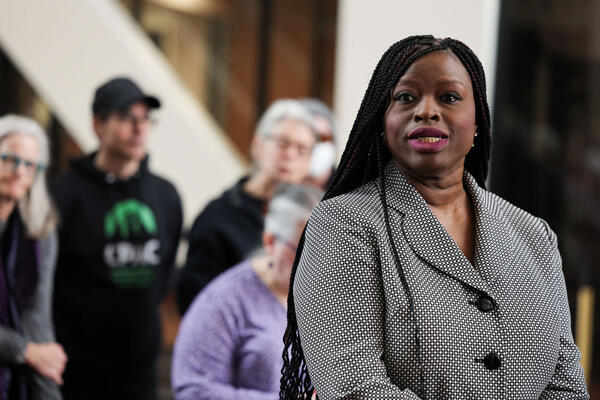
Rev. Nekima Levy Armstrong, a Minneapolis activist and ordained minister, was one of the organizers arrested. Referring to ICE, she told the Canadian Broadcasting Corporation on Feb. 4 that “They have been physically brutalizing people, dragging people from their homes, kicking down people’s doors, coming into people’s homes with big guns, arresting people unjustly, even U.S. citizens, and people who are here legally.” She added, “To have someone serving as a pastor who is also overseeing these agents is unconscionable, unacceptable, and antithetical to the Christian faith.”
Framing ICE operations as a defense of religious freedom is a familiar feature of President Donald Trump’s administration. But if the Trump administration were sincerely concerned with protecting religious liberty, then they would acknowledge that Levy Armstrong acted on her faith and in line with the First Amendment. But instead, the Trump administration is only interested in protecting and institutionalizing a specific kind of religious expression.
Kristi Noem, Trump’s Secretary of Homeland Security, defended her department’s work and immigration agents recently while testifying before lawmakers at a Dec. 11, 2025, court hearing. Noem said that it was “God’s work” to protect “the homeland” from “criminal illegal aliens,” whom Noem vowed to punish in that same testimony.
On Dec. 15, 2025, DHS released a recruitment ad featuring a Border Patrol agent, holding an open Bible between his hands, reciting the words of Isaiah 6:8, “Then I heard the voice of the Lord saying, ‘Whom shall I send? And who will go for us?’ And I said, ‘Here am I. Send me!’”
Only a week after an ICE agent brutally murdered Renee Good in Minneapolis, DHS released another Instagram video depicting their operations as examples of “peacemaking,” quoting Matthew 5:9: “Blessed are the peacemakers, for they shall be called sons of God.”
Democrats are calling for Noem’s impeachment.
Throughout 2025, headlines and videos circulated depicting the intensification of Trump’s immigration crackdown. Whether it’s immigrants being deported to countries that they have no connection to or the violation of human rights in concentration camps, the Trump administration has unleashed a brutal campaign against immigrants. In 2025, at least 32 people died in ICE custody. The Guardian called 2025 “ICE’s deadliest year in two decades.”
In the first weeks of 2026, at least eight people have died either in ICE custody or in encounters with federal immigration agents, including high-profile fatal shootings in Minneapolis that have caused nationwide outrage and protests. Federal officials have defended these actions by characterizing the individuals involved as dangerous threats to agents, even as video footage and eyewitness accounts challenge those official narratives. Despite mounting outrage, the federal government has shown no signs of remorse when it comes to conducting immigration raids. Consider the detainment of 5-year-old Liam Ramos after arriving home from school, or the transportation of a 2-year-old girl from Minnesota to Texas, where she was detained overnight before being returned to her mother the day after. Business as usual.
For Trump and his allies, mass deportation is framed as “God’s work”—the faithful protection of what is deemed “sacred” from that which might profane it. As Bondi’s post on X suggests, the Trump administration presents itself as acting under a divine mandate to protect “our houses of worship,” echoing Noem’s earlier claim that DHS’s defense of “the homeland” is in accordance with God’s work.
READ: Read This Before You Compare What’s Happening in the US to Nazi Germany
In the face of growing persecution of immigrants and their allies, Episcopal bishop Rob Hirschfeld warned clergy of an impending “new era of martyrdom.” In January, Hirschfeld instructed his priests to “get their affairs in order, to make sure they have their wills written, because it may be that now is no longer the time for statements, but for us, with our bodies, to stand between the powers of this world and the most vulnerable.” DHS Assistant Secretary Tricia McLaughlin labeled Hirschfeld’s comments about martyrdom “absurd” and said that the vulnerable people he should prioritize protecting are ICE agents.
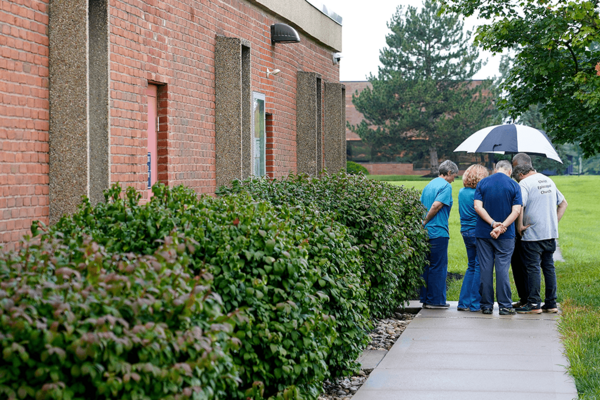
Clearly, the Trump administration has in mind a very particular religion and religious community that it wants to protect: Christian communities mainly comprised of citizens who believe that the president and his administration’s actions are God-ordained. If Bondi’s pledge to defend “houses of worship” were applied within a democratic framework that genuinely upheld First Amendment protections for all religious communities—regardless of tradition or denomination—then Good would not be dead, Levy Armstrong would not be facing “conspiracy against rights” charges for organizing a nonviolent demonstration, and bishop Hirschfeld would not be warning clergy of an approaching era of martyrdom. But most pointedly, if the Trump administration cared about protecting houses of worship, then ICE agents would not have disrupted a feeding program and children’s activity event at North Hills United Methodist Hispanic Mission to arrest a man who was providing food for the event.
Key to understanding the political theology animating the Trump administration’s actions and Bondi’s post on X is interrogating who is included in the word “our.” It is not houses of worship in general that are worth defending, but only “our houses of worship.” Neither all houses of worship nor all Christians are treated as deserving the protection of the state. Instead, some must be considered enemies of the state, or “domestic terrorists.” In this framing, these people are not included in the “our” that Bondi invokes and are therefore not protected. The roughly 100 pastors and church leaders who were arrested for protesting ICE following Good’s killing are not included in the “our.”
As a theologian, I read Bondi’s statement as conferring moral sanction on ICE operations while drawing from a long-established tradition in which Christianity is fused with authoritarian power in the U.S. and the West more broadly. The genealogy of this version of Christianity can be traced back at least to the European Middle Ages, when Christian language and rituals were routinely weaponized to racialize Jewish immigrant communities in Europe, authorizing the state to defend European Christian houses of worship against imagined Jewish “threats.” For medieval scholar Geraldine Heng, religion in the Middle Ages served as a way to subject “peoples of a detested faith, for instance, to a political theology that could biologize, define, and essentialize an entire community as fundamentally and absolutely different in an interknotted cluster of ways.”
As a theologian, I read Bondi’s statement as conferring moral sanction on ICE operations while drawing from a long-established tradition in which Christianity is fused with authoritarian power in the U.S. and the West more broadly.
Such religious sanctioning of state violence did not end with the Middle Ages. It carried into the modern period, as similar religio-racial logics were redeployed to authorize new forms of domination and exclusion. Africans were enslaved through theological appeals to the biblical “curse of Ham.” Indigenous peoples were dispossessed as their religious practices were cast as inferior to those of white Christian colonizers. Under Nazism, Jewish people were subjected to genocide in the name of protecting the imagined, divinely ordained purity of the so-called Aryan race.
In the U.S., these logics reasserted themselves in the wake of the Civil Rights movement, as right-wing politics fused white racism with Christian supremacy to resist desegregation and roll back the expanding economic, religious, and political freedoms being claimed by growing nonwhite, nonheteromasculine, non-Christian, and noncitizen communities. The rise of MAGA Christianity today is part and parcel of the longue durée of this kind of political theology.
Today, Christianity continues to accompany racial violence. The two remain deeply entangled and have historically shaped which communities are recognized as legitimate houses of worship worthy of defense. Bondi’s pledge to protect “our houses of worship” carries with it an implied boundary—one that marks certain religious communities as threats to be guarded against, as those which must be surveilled, raided, and even eliminated. Her statement, then, was not made in isolation; it belongs to a long history in which race and Christianity are wed to authorize the state to arrest, detain, deport, and kill on behalf of certain people.
I would be lying if I told you that I am not terrified by this. There is, indeed, such a thing as bad theology. And, as German theologian Hanna Reichel reminds us, “Bad theology kills.”
In Trump’s deportation regime, bad theology lurks beneath spent bullets and innocent blood. It slithers into our minds through Bible verses and theological appeals pasted across ICE recruitment ads and DHS social media posts, turning our eyes from the truth: Theological statements like Bondi’s are bad theology precisely because they kill.
Bondi and the rest of the Trump administration would have us believe that “God” is at work behind ICE operations and fatal shootings. If they insist on making that claim, then I will take them at their word—that they truly believe in a god who grants them authority to steal, kill, and destroy. But I will not consent to that god, no matter how insistently they invoke its name. It is a god I am neither compelled nor willing to love. All that god can do is kill.
Rather, I am compelled to believe that the true God is present in our neighbors whom the Trump administration is hunting and killing. This is the God who claims to dwell “in all” and “is all” (Colossians 3:11), and who identifies most closely with those whom Trump’s government has cast into the line of gunfire.

Yanan (or Abdul) is a writer from the Philippines who serves as editorial director at the Center for Barth Studies, where he guides initiatives that examine Christian faith and practice through the lens of progressive politics. His writing has appeared in BitterSweet Monthly, Interfaith America, the Institute for Christian Socialism, and other outlets.
Did this article have an impact on you? Tell us how! Whether you’re moved to take action, have a question, or want to share a comment (good or bad), we value your feedback!