SojoAction
Climate Justice
SojoAction: Climate Justice

We are living into a new era of climate change. Intense floods, cyclones, droughts, and wildfires are escalating in intensity and pushing the boundaries of extreme weather. Vulnerable communities, most often people of color and low-income people, already bear the disproportionate burdens of climate change.
Grassroots organizing by young people has ushered the climate crisis into the national conversation in ways never seen before. I believe people of faith are uniquely called and positioned to play a pivotal role in the national zeitgeist on climate change by providing moral leadership and clarity in the wake of such a moral emergency. We do this through building mobilizing power in congregations nationwide to advocate for transformative, just, and compassionate policies at every level of government.
We hope to provide definition to the climate crisis in ways that become palatable and energizing for people of faith through storytelling, handing the mic to those most afflicted, pushing for culture change, and leading from biblical rootedness. Join us.
Climate Justice
Resources

We're proud to present the story of creation care and climate justice…all wrapped up in doodle-filled, colorful, action-packed Creation and Climate Care Zine! This new resource is an easy and engaging way to learn, to jumpstart conversations on climate change, and finally to act together in order to heal and protect our common home.

This concise SojoAction resource aims to demystify the topic of climate change and clarify the call to take action for climate justice. Designed for Christians of all backgrounds, it addresses the most common questions and concerns we hear about the climate crisis and provides clear steps for action.

Raising our children for joy amid climate catastrophe.

Reclaiming life in a disposable culture.
By Sasha Adkins
Climate Justice
Latest Stories
-
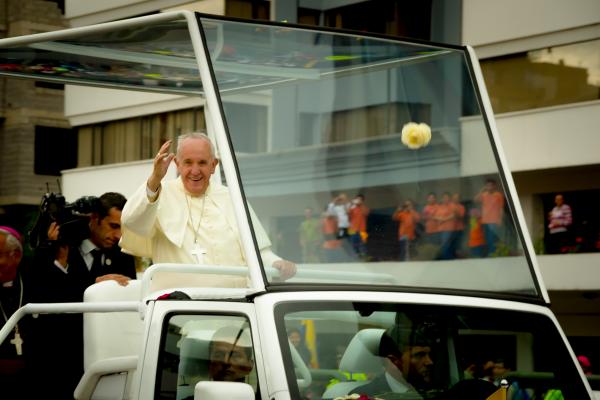
During a meeting with the World Meeting of Popular Movements, an international gathering of grassroots activists in Santa Cruz, Bolivia, Pope Francis acknowledged he didn’t have a “recipe” for a perfect economic-social-political system, but nonetheless recognized the current way of doing business fails to adequately defend the Earth, our common home.
-

Before snowballs on the senate floor, Republicans were champions of the environment. Those days are now long gone.
“The task of cleaning up our environment calls for a total mobilization by all of us. It involves governments at every level; it requires the help of every citizen.”
Sounds like a liberal Democrat, right? Someone who has been using Pope Francis’s recent climate encyclical Laudato Si’ (“Blessed Be”) as a political bludgeon, wielded against “climate change deniers?” Nancy Pelosi, perhaps? Not quite.
With these words, President Richard Nixon concluded his plea to congress in 1970 to take action on behalf of the environment, stressing that this was “an urgent common goal of all Americans.” Nixon then gathered bipartisan support as he spearheaded the creation of the Environmental Protection Agency, and inked 14 laws related to environmental protection.
To be sure, Nixon didn’t know what to make of environmentalists, once complaining that they wanted everyone to live like “a bunch of damned animals.” Still, when a 2012 poll asked 12 leading environmental groups to rank the three most environmentally-friendly presidents, Nixon came in second — behind Teddy Roosevelt, a fellow Republican.
-

The Role of the Black Church in Combatting Climate Change
The #blacklivesmatter movement is about more than an end to police brutality; it is call for the health, wholeness, and vitality of all black communities and a world in which black lives are no longer systemically and intentional targeted for demise. This includes an account of the physical environment in which black communities reside.
- ‹ previous
- 165 of 167
- next ›