ALFRED HITCHCOCK ONCE said, “In feature films the director is God; in documentary films, God is the director.” That’s true in a more theologically complex way than the director of Psycho and Vertigo meant. In a literal sense, a director controls a movie’s tone, guides actors’ performances, and chooses which shots make it into the final cut. In doing so, the finished product’s audience understands the story, characters, and themes through the director’s perspective. We see their creations as they see them, the same way God understands us entirely, beyond our actions and curated exteriors.
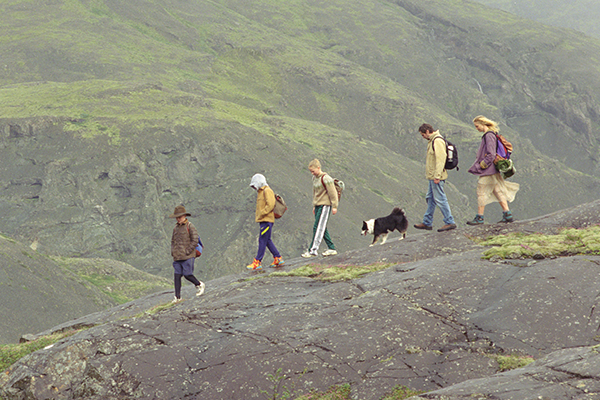
Hlynur Pálmason’s The Love That Remains synthesizes these ideas. The observant, lightly funny drama charts a year of life in an Icelandic family as artist mother Anna (Saga Garðarsdóttir) and fisherman father Magnús (Sverrir Guðnason) experience marital separation. Shot over several years and including Pálmason’s own children and dog in the cast, The Love That Remains is a tender portrait of people continuing to love each other in times of joy, confusion, and crises minor and major.
Every element of The Love That Remains feels lived in, from the family’s cozy, cluttered home to the armored target-practice dummy the children build in a field. Anna’s art—huge canvases printed with metal cutouts she leaves outside to rust—is a testament to intention and patience, creating beauty over a long, unhurried period the way Pálmason himself does.
The film only runs 109 minutes, but by the end of it, we thoroughly understand each family member. Nothing is too small for Pálmason’s interest—not the nubbly texture of Anna’s sweater, the downy feathers of a chick lovingly held by oldest daughter Ída (Ída Mekkín Hlynsdóttir), or the brightly colored harness cords sliding along the dark green deck of Magnús’ fishing trawler.
Even the occasional slide into surrealism illustrates the characters’ mental states and sympathizes with their frustrations. Did the plane carrying a snooty gallerist who had turned down Anna’s work actually crash? Probably not, but we understand why she might want it to. Is Magnús really floating in the sea waiting for a boat to take him to land so he can see his son in the hospital? Unlikely, but the frustration of a job that keeps him away from his family for months is as real as it gets.
With The Love That Remains, Pálmason creates a world and characters that he knows completely. He loves and delights in his creations, even when they’re at odds with each other. In considering Hitchcock’s concept of director-as-god, Pálmason’s film is perhaps the truest view of it in a day-to-day sense: caring, hopeful, and often amused at our foibles and interactions, no matter how small.

Abby Olcese is a freelance film critic and writer based in Missouri. You can find her on Twitter @abbyolcese.

Did this article have an impact on you? Tell us how! Whether you’re moved to take action, have a question, or want to share a comment (good or bad), we value your feedback!