IN SOME WAYS, this November will be an ordinary national election in the United States. As is true in every “even” year, all 435 seats in the U.S. House of Representatives are up for reelection. In the U.S. Senate, 35 seats are up for reelection. In 2024, it was 34 seats; in 2022, it was 35. Incumbents tend to have an advantage in elections. All very normal.
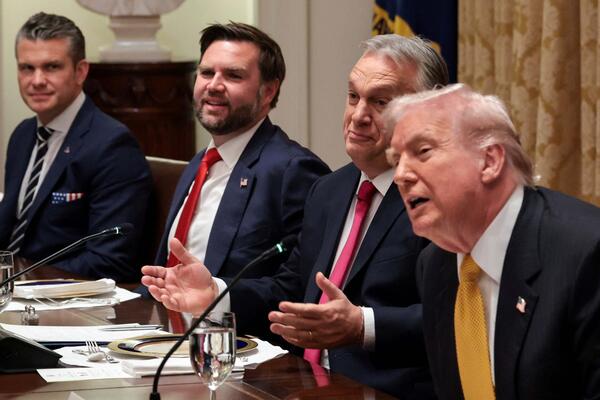
But a cloud of uncertainty overshadows what should otherwise be a typical election process. How will unjustly redrawn election maps in the South have an impact on Black representation at the polls? Will the structures of our tenuous democracy endure the assaults from the highest court in the land? What happens when the country’s president calls into question the integrity of election results whenever the results don’t favor him?
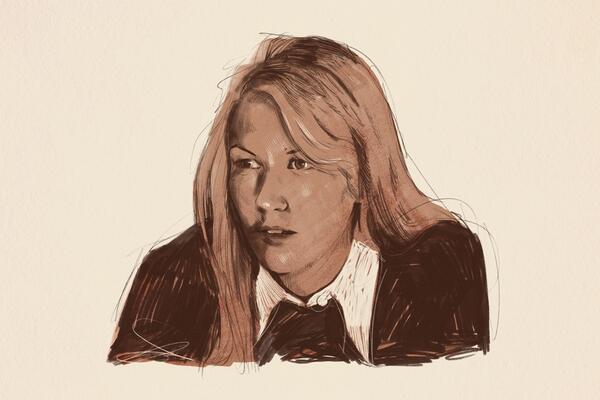
The presence of untruth and the logic of empire have led to deep distrust in core elements of democracy. When we are in such a crisis, contemplation can ground us. The late attorney, theologian, and educator Barbara Holmes called this experience “crisis contemplation,” explaining, “When the ordinary isn’t ordinary anymore and the crisis is upon us, the self can center in this refuge that I am calling ‘crisis contemplation,’ a space that is neither the result of spiritual seeking nor the voluntary entry into meditative spaces. It is a cracking open, the rupture and shattering of self, community, expectations, and presumptions about how the world works. It is the result of trauma, freefall, and wounding.”
Crisis contemplation is not resignation.
According to Holmes, crisis contemplation offers revelation that dismantles the illusions we’ve been given. Many Americans are still unlearning the illusion that the country is a Christian nation. What was assumed to be Christianity was actually Christian nationalism—an unholy enmeshment between church and state—and the result has been a frontal assault against Black people in particular.
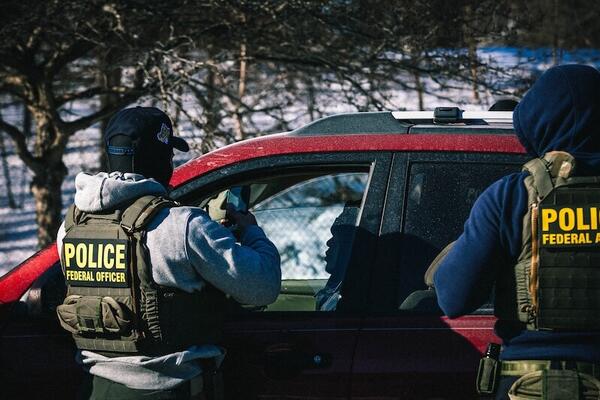
Holmes’ crisis contemplation holds the Black experience at its center. This is instructive because when we attend to the lives and experiences of the disenfranchised, we discover that freedom is never just individual; contemplating the history, present reality, and particularity of the Black experience produces universality. Namely, if only some of us are free, none of us are truly free. The logic of empire holds no fidelity to any person who stands in solidarity against injustice; remember the way immigration agents murdered two white people, Renee Good and Alex Pretti, for doing just that.
Ultimately, through crisis contemplation, we combat the logic of empire by acting faithfully in the crisis of the moment, doing so while holding a longer horizon of hope. Indigenous Haudenosaunee wisdom teaches the Seventh Generation principle, that is, making decisions while recognizing their impact on seven generations into the future. Will we realize that our votes are not simply our individual decisions—that they impact other, more vulnerable, people for generations to come?
As with all contemplative traditions, this is a question of learning how to see. Crisis contemplation is not resignation. Instead, it draws from cleaner, unmuddied waters. As Holmes wrote, “I can enter alone or with my community. We can journey inward, with or without music, with our bodies as engaged as our minds, but we must relinquish control and seek grounding within the mystical depths of inner spaces.”
The ordinary is no longer ordinary. But the mystical depths of love and freedom can still follow us to and beyond the voting booth.

José Humphreys III is an ordained minister, author of Seeing Jesus in East Harlem: What Happens When Churches Show Up and Stay Put, and co-author of Ecosystems of Jubilee: Economic Ethics for the Neighborhood (Zondervan, 2023).

Did this article have an impact on you? Tell us how! Whether you’re moved to take action, have a question, or want to share a comment (good or bad), we value your feedback!