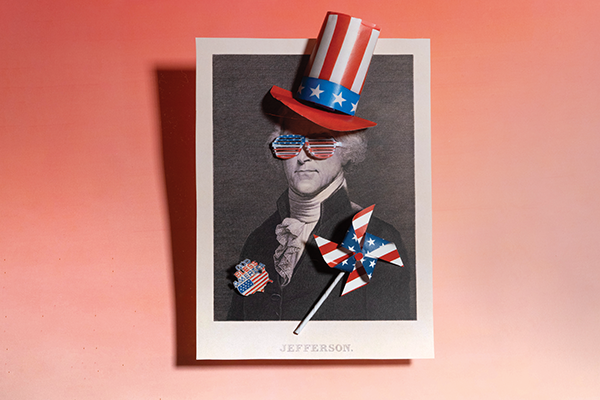
NEXT DOOR TO the West Wing, in the Eisenhower Executive Office Building, you’ll find portraits of the 56 signers of the Declaration of Independence. Visitors to the exhibit—part of the White House’s celebration of the 250th anniversary of the nation’s founding—scan QR codes to watch AI-generated videos of these figures come to life.
But the history this gallery presents is carefully curated and conveniently cleansed. Take Thomas Jefferson: His talking portrait makes no mention of the hundreds of people he enslaved, including Sally Hemmings, whom he forced to bear multiple of his children. Instead, the animated Jefferson praises the “empire of liberty” created by the Louisiana Purchase—ignoring the First Nations already living there and the forced removals that followed. John Adams repeats the anachronistic quip much beloved by today’s Far Right: “Facts do not care about our feelings.” Benjamin Franklin fails to mention that he had once been an enslaver but by the 1780s had become a vocal abolitionist. None of the signers mention that they cut a section where Jefferson lambasted King George for “captivating and carrying [Africans] into slavery in another hemisphere, or to incur miserable death in their transportation thither.” History weeps.
Read the Full Article