THE SOLDIER AT the National Memorial Cemetery of the Pacific in Honolulu could not have yet been in his 20s. By my estimation, none of them, standing there sweltering in the sun with their sprouting mustaches, were. Names from the Global South were stitched onto their uniforms. My grandfather joined the ancestors some years before, but this was my first time back in Hawai’i since his passing. We traced his steps backward across the Pacific to return him to my grandmother and their childhood home.
Long dormant grief flared and family members grimaced awkwardly as the ritual began. The soldiers’ cadence, turns, bugling—the ceremony of it all! Stars and stripes creased as if made of origami paper, delicate movements of the hand like a master at a tea ceremony, reminding me of long afternoons learning scouting creeds, knots, and flag-folding technique while away at camp: “On my honor, I will do my best to do my duty to God and my country ... .”
Joltingly, one of the warriors approached me, gesturing for me to receive the flag. We had not rehearsed this at all. Caught off guard, my eyes pleaded for help—my father, aunts, cousins, and sisters all demurred. I stood up an inch taller and held out my hands. The soldier looked into my eyes with the seriousness of a physician delivering life-altering news, spoke a set of sacred words, and pressed the flag into my arms like a nuclear football.
Tears announced themselves silently as I passed through a vale of complicated feelings. I have never wanted to believe in the American dream more than in that breathless moment, cradling the swaddled cloth as if a newborn. In that moment, I wanted, with every fiber in me, to believe that this flag—which I would rather see aflame than aloft—could symbolize anything other than plunder and conquest.
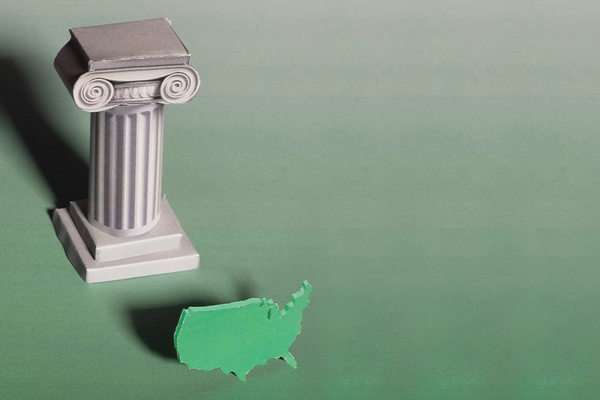
This summer, as the United States celebrates its 250th birthday, the White House will host concerts, a mixed martial arts fight, and prayer events. These gatherings collectively suggest the fusion of Christian nationalism with Roman-style gladiatorial entertainment—sacramental bread and circuses of a uniquely Trumpian variety. But spectacle aside, rhetoric comingling God’s blessing and U.S. destiny has a long, bipartisan legacy. Both President Ronald Reagan and President Barack Obama, with varying degrees of self-consciousness, cloaked their confession of national supremacy in theological raiment, invoking the Puritan John Winthrop’s sermon about a “city on a hill.” American exceptionalism remains, alongside an embrace of technological innovation fostered by unfettered capitalism, a cherished tradition, as American as Apple. In other words, God made us the most special of all, and our freedom is the best.
The gospel posits every empire as but a passing speck in the grand sweep of salvation history.
The good news of Jesus Christ contains liberating news for U.S. Americans—we do not have to believe any of this. Rather than pretending that our nation occupies a uniquely privileged place in the cosmos, the gospel posits every empire as but a passing speck in the grand sweep of salvation history. By unsettling the neat pairing of “God and country” and interrogating our divine chosenness, we can rehabilitate a distorted understanding of freedom, finding a more harmonious place in the wider family of creation.
Narcissism and vulnerability
“THERE ARE THREE Things extreamly hard,” wrote Benjamin Franklin in 1750: “Steel, a Diamond and to know one’s self.” Nations are no more skilled than individuals at seeing themselves clearly. Faced with painful realities, we can minimize our faults, moving to project an image of competence, cohesion, and strength. “The heart is devious above all else; it is perverse,” lamented the biblical prophet Jeremiah (17:9), “who can understand it?” It is difficult to know how much we can trust our lying eyes amid the smoke and mirrors of a politics straight out of central casting, worsened by a deluge of misinformation and optical illusion. One envies the apostle Paul, who saw merely as if “through a mirror dimly.”
Pop culture wields the label “narcissist” with abandon, but it is worth defining a term that largely operates as shorthand for total depravity. Narcissism is not simply excessive self-love. It is a rigid style of self-regard that distorts reality, blocking relationships of true reciprocity. It combines a sense of entitlement—I am exempt from the ordinary rules that govern human life—with wounded grievance—my greatness has gone unrecognized.
Doctrines of American exceptionalism corrupt a natural sense of belonging and common life into a collective version of this psychological defense, one with severe costs. As psychoanalyst and Holocaust survivor Erich Fromm observed, narcissism in large groups “is one of the most important sources of human aggression.” Indeed, Polish researchers have linked belief in unrecognized national greatness with support for violence against refugees.
In psychoanalytic terms, the intensity of a defense often equals the force of what it is guarding against. Grandiosity shields something—maybe vulnerability, maybe inadequacy?—and when authentic attunement is lacking, the injured subject may generate their own praise, getting high on their own supply rather than going without.
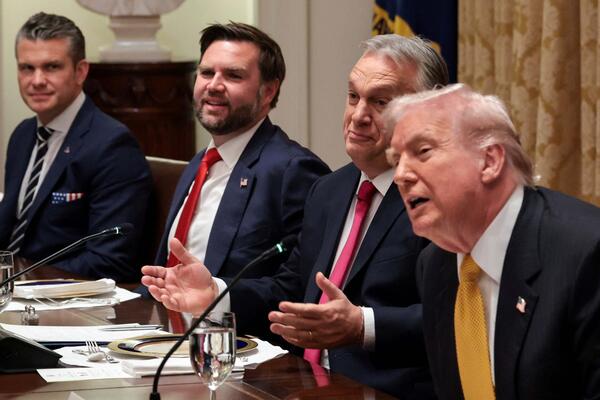
There is something undeniably noxious about a person or nation that constantly asserts it is better than you. But there is something fundamentally more pitiable, even serving as a radical point of empathy, about the boasting child making up stories, insisting that he is the most special boy in the world. (When a reporter wondered what Trump’s late father would have made of his son’s successful run for president in 2016, the then-70-year-old man replied: “He would have absolutely allowed me.”)
What powerful feelings, then, is the United States’ exceptionalism defending against? Whose approval are we seeking? Perhaps this exceptionalism defends against insecurity and humiliation—as a young, fragile nation, we sought to imitate older empires by crocheting a myth of self-greatness that would stabilize a frail self-identity. Over time, this bluster poisoned the well of our collective self-regard, making us dealers of narcotizing deceit, hooked on our own self-mythologizing.
kuramitsufeature6-26-2 (1).png
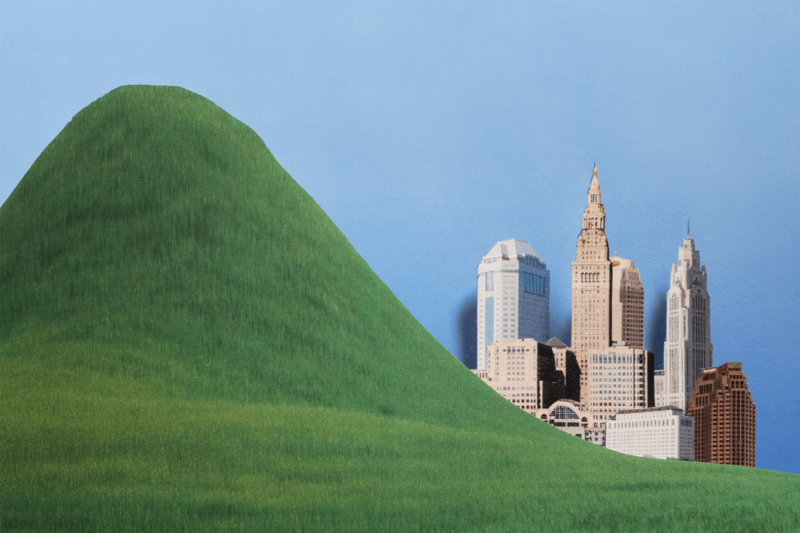
A more chilling possibility is that our narcissism protects us not from feelings of inadequacy, but from recognizing our violence. Loud protestations, or celebrations, often paper over festering wounds. “I despise your festivals, and I take no delight in your solemn assemblies,” God tells Amos (5:21), incensed at the sins committed against the wretched of the earth. How much of our own national mythology and festival is designed to dim our nagging awareness that the principally exceptional thing about our founding was its cruelty? As ecstatic festivals marking America’s birth raged around him, Frederick Douglass charged exactly this: “There is not a nation on the earth guilty of practices, more shocking and bloody, than are the people of these United States, at this very hour.”
The biblical meaning of jubilee, rather than simply an anniversary, had to do with a divine exchange: God’s blessing arrived not by national greatness but by the remission of debt and the freedom of the enslaved. Many Jewish voices, at the mercy of Christian empire over the centuries, have long critiqued the deployment of the divine to bless nationalism. Israeli historian Ilan Pappé references an early 20th century letter written by the Hasidic rabbi of Dzikover critiquing Zionism. The rabbi balked at supporting the new nationalist interpretation of Jewish history. According to Pappé, Zionism asked the rabbi to trade the treasures of Jewish faith for nothing but “a rag, soil and a song—a flag, land, and a national anthem.”
This is similar to the exchange being pushed on me that day in the cemetery: to swap my grandfather for a flag, substituting the feelings of love and loyalty that he had earned over a lifetime with this shining national symbol. I was being seduced to gloss over the fact that he served in a racially segregated military, or that the very cemetery that would provide his blessed rest had been cruelly carved from Native Hawaiian sacred lands.
The founding of the United States, contrary to the assertion of White House press releases, did not unleash “the single greatest force for goodness, justice, prosperity, and human flourishing the world has ever known.” The biblical prophets do not allow us that comfort, much as we may be tempted with a smooth story in which we move closer to God’s dream for our world with each vote. From our founding, we have enacted our freedoms in ways that clearly contravene God’s law. For this reason, Martin Luther King Jr.’s naming of “the greatest purveyor of violence in the world today—my own government,” remains true.
Loud protestations, or celebrations, often paper over festering wounds.
American liberty vs. Christian freedom
WHAT DO OUR freedoms permit us to do? Liberty is a cry found on the lips of both white nationalists and refugees, smuggled out of prison on toilet paper and printed on beach towels and bikinis at Walmart. The oversaturation of the term risks its absconding from any political legibility. But when many Americans invoke freedom today, we simply mean the ability to do whatever the hell we want. As Homer Simpson is encouraged when he seeks out illegal Fourth of July fireworks: “Celebrate the independence of your nation by blowing up a small part of it.”
We mean, I think, the freedom to destroy. How we litter, how we frack and drink and drive and park, how we spread our elbows on the train and eat and see the limits of our responsibility ending at our children or property line. On the world’s stage, we feel free to make choices that take all of someone else’s away—as in the ancient Greek slave republics that extended freedom to slave-owners only. We came to be through a terrible excess of freedom, manifesting our destiny across an entire continent, hemisphere, planet. “Whiteness,” sociologist W.E.B. Du Bois observed, “is the ownership of the earth forever and ever, Amen!” The practice of freedom as destruction is crystallized by conservative pundit Ann Coulter, who in 2001 claimed a scriptural mandate: “God gave us the earth. We have dominion over the plants, the animals, the trees. God said, ‘Earth is yours. Take it. Rape it. It’s yours.’”
But in the incarnation and resurrection of Jesus Christ—the most seminal political events in all of human history—freedom is unveiled as a declaration of interdependence, less the narcissistic right to do what we wish without consequence than an ethic of constraint that fosters mutuality. When debates about eating food sacrificed to idols erupted in the Corinthian community, Paul proposed that true freedom is found in practicing a loving ethic of neighborly restraint: “But take care that this liberty of yours does not somehow become a stumbling block to the weak” (1 Corinthians 8:9).
Scripture testifies to this alternative, a relational understanding of celebrating our freedom. In creation, God’s own self drew back to allow for the full autonomy and development of the other, laying down a kenotic framework that the early Philippian church would sing about meeting in the person of Christ. In the Exodus narrative, the foundational story of liberty in the Bible, freedom is about deliverance from oppression—and into covenant. “You, having been set free from sin,” Paul argues, “have become enslaved to righteousness” (Romans 6:18).
We are to share this fragile earth, our island home, with people of every nation, striving to avoid exercises of our freedom that cause others to stumble. The land is not to be raped, but stewarded, akin to the Hawaiian concept of kuleana, a dominion of caretaking and kinship. “Make your kuleana pono,” songwriter and activist Israel Kamakawiwo’ole said—seek righteousness and harmony in your relations with all life. Such an attitude challenges a provincial or oppositional Christian ethic, like J.D. Vance’s invocation of Augustine to insist that to “love your family” takes precedence over—and is separate from—how we treat our neighbors and the rest of the world.
True divine blessing
YEARS AGO, MY mother graciously invited me to host my birthday party at her house. Her street address is 1776, I texted everyone making the long drive from the city to the suburbs. When I arrived, I saw the red, white, and blue fluttering over the driveway and asked her to take the flag down. We argued bitterly, and it stayed up. One friend arrived and said dryly, “I wasn’t sure it was the right place when I saw the flag, it nearly scared me off!”
My grandfathers both took up arms against fascism and cradled me with tenderness. I love them with a fierceness unshaken by the grave. I also do not display the flag I was handed in the cemetery. Despite wanting to surrender that day in the cemetery, to join up with the troops and be swept away in the symphonic passion of ecstasy, a grand, uncomplicated narrative of courage, heroism, and greatness where we march ever more brightly forward, assured that God is on our side. I cannot. Not on stolen land, while the prophetic critique stands: “No, no, no,” Rev. Jeremiah Wright preached in 2003. There are conditions on divine blessing. “Not ‘God bless America.’ God Damn America! ... for killing innocent people. God Damn America … as long as she keeps trying to act like she is God and she is supreme.”
The pleasure into which our nation is about to erupt, as in Douglass’ time, remains “mere bombast, fraud, deception, impiety, and hypocrisy” as long as we continue to infringe on the freedom of the Other, the freedom to simply live. Our imperial benevolence has never been anything but annihilation to those on the wrong end of our boots. The Declaration of Independence itself grounds the freedom of “full Power to levy War” in “a firm reliance on the protection of divine Providence.” With the holy and unspeakable name of God so summoned to justify acts of conquest, we deliver salvation to the entire world from the barrel of a gun. But God does not specially guide our warmaking, nor have we been chosen in any special sense. All earthly governments stand under judgment from the One who has stretched beyond time, who cannot be etched into crusaders’ tattoos, printed onto dollar bills, or stitched onto a flag.
In the incarnation and resurrection of Jesus Christ, freedom is unveiled as a declaration of interdependence.
There is a fine line between unique and special, special and superior. What do we do in those moments when something catches in our chest and we realize with a twinge of burning recognition that some small, early part of us is still attached to the idea that our nation is not just unique, but special? Relinquishing this may require acknowledging grief, similar to how many Jewish anti-Zionists have described their process of disillusionment with the nationalism they were taught to trust “over there.”
I call God’s message to U.S. Christians “good news” because narcissism is exhausting to maintain. So much labor is required to constantly center ourselves as some special instrument in God’s history, when, like the divine bellowed to Job (38:4), we were not even a twinkle in our founding fathers’ eyes when God laid the foundations of the world. The myth of exceptionalism that undergirds the scourge of Christian nationalism is spiritually corrosive. It constrains our ability to perceive the ways that we exercise our freedoms at the expense of the Other.
True blessing may instead come from reparation, repair, and feasting with and feeding one another. True joy is to be found in such communion, a liturgy of resilience and embrace; Christians looking for something to rally around or rejoice over might find something worth praising in the witness of people such as poet Lucille Clifton. Clifton called being an American, as a Black woman, being “born in babylon.” But even in the heart of whiteness, she found something amazing to commemorate: “Won’t you celebrate with me ... everyday something has tried to kill me and has failed.”

The Rev. Kenji Kuramitsu is an Episcopal priest and clinical social worker living in Chicago.
Did this article have an impact on you? Tell us how! Whether you’re moved to take action, have a question, or want to share a comment (good or bad), we value your feedback!