
Zachary Lee (he/him) is from Chicago’s North Side (he feels the need to clarify he’s actually from the city). In 2020, he graduated from Cornell University where he studied English, specifically focusing on creative writing and science fiction, and minored in Spanish. His senior thesis focused on how Asian American science fiction is inherently a genre of reconciliation, one where authors can prototype better worlds that are not solely rooted or constrained by present hardships.
An avid writer, Zachary served as editor-in-chief, editor, and writer for Claritas, Cornell’s journal of Christian thought, and contributed to his school’s newspaper, The Cornell Daily Sun. While he studied abroad at Oxford, he co-founded Through a Glass Darkly, Oxford's very first student journal in Christian thought and art. He loves to write about the intersection of faith and media, slyly finding ways to use writing projects as an excuse to stay up to date on pop culture by writing for sites like Think Christian. For two years after graduation, Zachary served as the content and communications fellow at Chesterton House, a Christian study center which, like the Sojourners Fellowship Program, had an emphasis on intentional residential Christian community.
Zachary credits his participation in Rooted & Radical Youth Poetry Festival (he knew it then as Louder than a Bomb), Chicago’s annual slam poetry festival, as first sparking his interest in justice work, specifically the way authors use writing to imagine better worlds while decrying present injustices. He’s excited to continue to press further into the way words can be tools for justice as online editorial assistant at Sojourners.
With his spare time, Zachary happily evangelizes about and logs films on Letterboxd, collects and poses action figures, and often writes down the funny and/or profound quotations the people around him say (that they’ve probably forgotten about). While hope characterizes much of his writing and vocational interests, the one place where he’s given up hope is catching up on his ever-expanding book list (he’s currently on book nine of 92+). That doesn’t mean he won’t try, though.
Posts By This Author
Our Most Anticipated Movies of Fall and Winter

Try as my mother did to instill the chronology of the liturgical calendar in me, I’ve instead opted to track the passage of time by the movie release calendar. Right now, we’re in anything but Ordinary Time.
What thrills me about the fall and winter movie season is that, for the most part, the movies released in this window are the ones that will be in the conversation for the rest of the year (and even into the new year), whether it’s because they’re nominated for awards or just remain people’s personal favorites. It was around this time last year when I saw visions like Frankenstein, No Other Choice, Train Dreams, and Wake Up Dead Man. That’s not to say the movies of the summer and early months aren’t without substance or provocation (I still find myself thinking about scenes from 28 Years Later: The Bone Temple, Leviticus, Disclosure Day, and, of course, The Odyssey). Maybe it’s something about the liturgical motions of the season itself, the way we move from bright days to crisp nights to winter chills, that makes the films that come out during this time weightier and cozier, a cinematic hearth that burns on the fuel of new releases.
Everyone in ‘The Death of Robin Hood’ Is Praying For Something Different

From its title alone, Michael Sarnoski’s The Death of Robin Hood telegraphs its ending early on, but as with most of the director’s films, the joy in watching comes from the journey of bearing witness to the unexpected ways his characters arrive at their endings.
‘Blue Heron’ Infuses Memory With Grace
Sophy Romvari’s semi-autobiographical drama demonstrates the power of telling stories about our past.
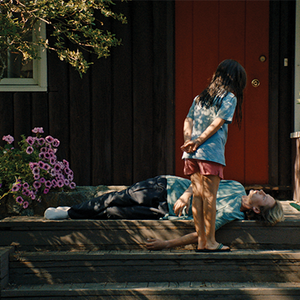
I didn’t expect to cry watching hash browns burn in a cast-iron pan, but that’s the shattering power of director Sophy Romvari’s Blue Heron, a semi-autobiographical drama that ruminates on the power and limits of our memories.
From Artemis II to Cinema, Why Are We Drawn to Space Stories?

As of this writing, Phil Lord and Christopher Miller’s sci-fi epic, Project Hail Mary, is the third-highest-grossing film this year. For a book adaptation that explores heady sci-fi concepts, that’s no small feat, and it’s clearly struck a chord with viewers. Before NASA’s Artemis II expedition launched, the crew watched a screening of the film.
Space films and space expeditions can both inspire a particular type of awe. I think of the striking photos by the Artemis crew during their expedition, particularly the one where we see Earth partially hidden.
Finding Church at a FEMA Camp
Director Max Walker-Silverman’s Rebuilding celebrates the unique way people come together during a crisis.
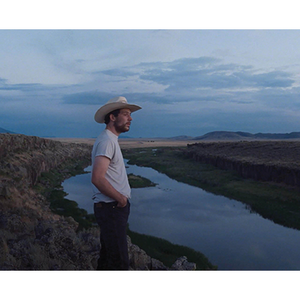
WHEN I READ Acts 2, I imagine that those first Christians experienced both profound beauty and aggravation. On Pentecost, disparate people came together to serve each other and bear one another’s burdens: “They would sell their possessions and goods and distribute the proceeds to all, as any had need. Day by day, as they spent much time together in the temple, they broke bread at home and ate their food with glad and generous hearts” (verses 45-46). It’s a beautiful portrait, and yet anyone who has lived in intentional community knows that such tight-knit bonds can be as draining as they are rewarding; sharing meals in large groups is fun, until it’s time to do the dishes.
‘Reminders of Him’ Is a Love Story About Forgiveness After Prison

I don’t often think of the romance genre as a cinematic vehicle for social commentary. When your film is exploring the complications of modern love in the straitjacket of a “will they/won’t they” story, it can be hard to comment on larger themes. While there are, of course, exceptions to my bias, I often feel that romance films are too preoccupied with the inner lives of their characters to turn their lens outward to societal ailments. While director Vanessa Caswill didn’t entirely abandon the cheesy or saccharine for her latest film, Reminders of Him challenged my pre-conceived romance biases. Based on the Colleen Hoover novel of the same name, Reminders of Him is a tender love story that offers pointed commentary about forgiveness and redemption, as it delivers a humanizing portrait of those who have been victims of the criminal legal system.
Romances tap into the universal longing to be desired, seen, and known. But Reminders of Him raises those emotional stakes by centering Kenna (Maika Monroe), a woman recently released from prison who has been told by both the state and her community that she’s not worthy of redemption or love.
A Forgotten Utopia Comes to Life in ‘The Testament of Ann Lee’
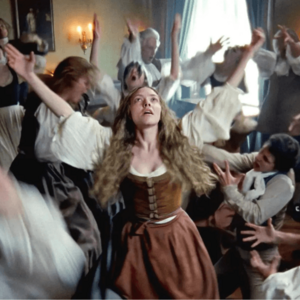
I’ve never seen spiritual ecstasy put to screen in quite the unvarnished manner as director Mona Fastvold’s The Testament of Ann Lee. The film follows the life of Ann Lee (Amanda Seyfried), tracing her ascension to matriarch and religious leader of the Shakers, a religious sect in the 18th century. Fixtures of the Shakers’ expression of faith include religious rhapsody, often manifesting with their members shaking, shouting, dancing, and singing as a way to express prayer and communion with God.
Lee’s theology may be questionable to those who cling to orthodox views of Christianity. Known by the Shakers as Mother Ann Lee, the trailblazing leader was regarded as the female manifestation of God’s dual nature (i.e., the female equivalent of male divinity) and was regarded by her followers as the second incarnation of Christ. Yet the community Lee strove to create was one of radical inclusivity and belonging—a lesson churches today could stand to learn from.
Our Most Anticipated Films of 2026
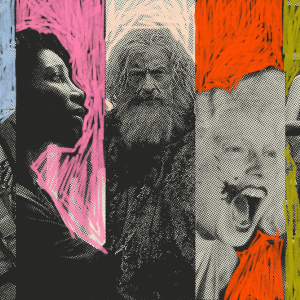
2025 was a banner year for movies nestled at the intersection of faith and justice. Many of those films that Sojourners authors covered, from Sinners to One Battle After Another to KPop Demon Hunters, will continue to be in the cultural conversation this year, especially with the Academy Awards looming.
Below is a list of films that Sojourners can’t wait to watch this year. It is by no means exhaustive; as excited as I am for The Mummy and Supergirl, for instance, I won’t know if those blockbusters have a faith angle until they hit the screen. You never know, Supergirl’s terrier Krypto might turn out to be a caped Christian pacifist. What follows, then, isn’t a catalogue of certainties, but a watchlist shaped by hope, curiosity, and the expectation that questions of faith and justice will keep finding their way onto the big screen—sometimes from the most unexpected places.
Sojourners’ Top Movies of 2025

For five years now, Sojourners has created a list of our favorite films of the year. And because we’re Sojourners and not Vulture or IndieWire, our list follows a different set of priorities. We only focus on films that are concerned with spirituality or justice (or when we’re really lucky, both).
This year, more than any of the other four years we’ve done this round-up, I was struck by the sheer number of films grappling with faith and justice.
Unto Us a Scary Child Is Born
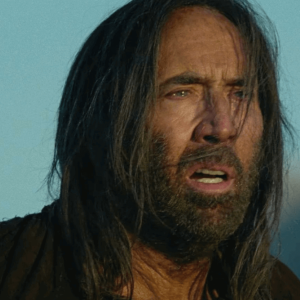
What if Jesus used his omnipotence not only to curse barren fig trees but also to kill those who annoyed him?
That’s a premise director Lotfy Nathan explores in The Carpenter’s Son. The supernatural horror film imagines Mary, Joseph, and Jesus’ time in Egyptian exile after they flee King Herod (though curiously, none of the characters in the film are directly called by those names). Nicolas Cage plays the Carpenter, who, along with the Mother (FKA twigs), tries to protect their son (played by Noah Jupe, credited only as The Boy) from the suspicious townspeople around him. The Boy’s miracles are awe-inspiring, but they’re also terrifying: In one sequence, he pulls a snake out of a woman’s mouth. While the Carpenter and Mother try to control the Boy’s power, they’re not able to stop his wanderings. Eventually, his curiosities lead him to a devil figure—a character known only as the Stranger (Isla Johnston), who tries to use his powers for her own ends.
When Confrontation Is True Love
A Little Prayer is a family drama full of quiet divinity.
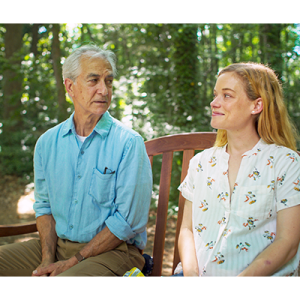
A LITTLE PRAYER is a family drama that embodies its title. Meek and heartfelt, the latest film from director Angus MacLachlan is full of quiet divinity.
Set in the suburbs of Winston-Salem, N.C., A Little Prayer focuses on Vietnam War veteran Bill (David Strathairn), who has lived in the same house for decades with his wife Venida (Celia Weston). Their son, David (Will Pullen), and daughter-in-law, Tammy (Jane Levy), live in an extension to their house, seemingly in harmony. But this peace is threatened once Bill begins to suspect that his son is cheating on Tammy.
I Want to Go to the Church in ‘Roofman’

In a climactic moment of the crime-comedy Roofman, Jeffrey Manchester (Channing Tatum) enters a Presbyterian church. It’s a moment of respite, both for him and the audience. Until then, the Army veteran had been a man on the run: After robbing more than 40 McDonald’s to support his family, police unceremoniously arrested Jeffrey at his daughter’s birthday party. Though sentenced to 45 years in prison, he escapes and camps out in a hollow wall behind a bicycle display in a Toys R Us (Here is where I’ll mention that the film is based on a true story).
Pretty quickly, Jeffrey’s refuge becomes isolating. What good is a store full of toys if you have nobody to play with? While it would be risky to enter a public space, the desperation for connection drives Jeffrey to the pews.
The Best New Movies Coming Out This Fall and Winter

Oscar season hasn’t even started, and 2025 is already shaping up to be a strong year at the movies. We’ve seen small-budget standouts, from the thought-provoking body horror of Together to the empathetic dramedy of Sorry, Baby. Even the superhero blockbusters—Superman, Fantastic Four—had more to say about justice and community than I’ve come to expect from spandex cinema. And then there was Sinners, which was perfect.
Watching ‘How To Train Your Dragon’ Made Me Think of G.K. Chesterton

WHEN THE CREDITS rolled for the live-action remake of How to Train Your Dragon, I didn’t expect to think of Catholic theologian G.K. Chesterton. But it makes perfect sense. What better time to remember the words of the “prince of paradox” than during a kid’s movie about a dragon slayer who becomes a dragon friend, all with the backdrop of Iceland’s natural beauty and composer John Powell’s engrossing musical score. The film easily summoned these words from Chesterton’s 1909 essay collection Tremendous Trifles: “The world will never starve for want of wonders; but only for want of wonder.” Beauty and wonders surround us. And if we’re willing to stop and listen, such gifts can dislodge our biases and fears.
The new film focuses on Vikings who live on the isle of Berk, where they fight dragons for survival and space. The socially awkward and soft-spoken Hiccup frequently clashes with his father, Stoick, the Viking leader. Hiccup eschews Berk’s traditional masculine norms; he feels more curiosity than bloodlust toward the dragons. Yet, Hiccup gets his chance to prove his worth when he seems to kill the most feared dragon, Night Fury.
Hiccup is a normal kid: He has crushes, insecurities, and familial angst. Director Dean DeBlois knew Hiccup was joining a long line of powerful but unassuming heroes. “There’s a time-honored tradition of protagonists who are just regular kids but have a transformative bond with something amazing,” Dean told Sojourners, calling to mind Luke Skywalker from Star Wars and Elliott Taylor from E.T. But these seemingly unexceptional heroes are in fact gifted in their capacity for awe.
Training Dragons—and Boys to Be Better Men

<p>
'How to Train Your Drago' / Universal Pictures
</p>
Sojourners spoke with DeBlois about the film’s relevancy, the importance of wonder in the creative process, and filmmaking as an act of faith.
A Creatively Horrific Riff on Genesis 2
How Michael Shanks’ film “Together” uses horror to comment on codependency.
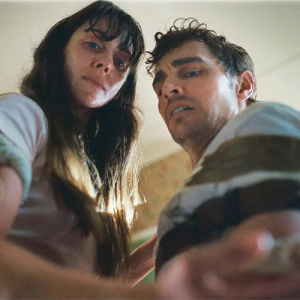
From Together
BY DESIGN, BODY horror is a genre that’s hard to stomach. It trades jump scares for lengthy exposure to imagery that gets stuck in both your mind and gut. These depictions of the degeneration or mutilation of the body offer embodied critiques of societal problems, like unrealistic beauty standards (The Substance) or online surveillance (Possessor), or, as is the case in Michael Shanks’ forthcoming film, Together, dysfunctional romance.
One moment in particular sticks out. In a scene from the first half of the film, we watch Tim (Dave Franco) and Millie (Alison Brie) kiss tenderly. But as the kiss ends, the couple finds that their lips have fused together. While Together features many gruesome scenes of Millie and Tim testing the adage of “till death do us part,” Shanks’ film has more on its mind than just grossing you out; it explores the dual discomforts of romantic complacency and romantic codependency.
Tim and Millie move to the remote countryside for Millie’s job at a small school. Tim, a musician, has felt creatively stuck and emotionally hollow. And while Millie is hopeful that the move might be a fresh start for their relationship, the transition is looking more like a continuation of moorage. Franco and Brie — who are married in real life — distinctively capture the complacency that can come in a long-term relationship.
In ‘Heretic,’ Hugh Grant Is a Terrifying Theo Bro

'Heretic' / A24
Heretic is a litany of theological inquiries wrapped in the skin of a horror movie. Like Legion, the frights of directors Scott Beck and Bryan Woods’ film are many, but its biggest scare isn’t demonic or paranormal or gory: It’s the unique terror of being caught in a theological conversation with a self-righteous man.
Meet the Queer Methodist Who Played ‘HOT TO GO!’ on Church Bells
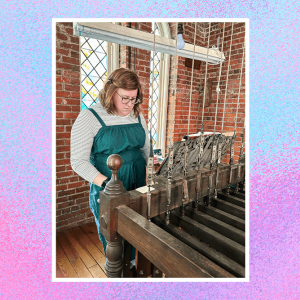
Katelyn MacDonald plays the chimes in Duke Memorial United Methodist Church’s bell tower. Courtesy Katelyn MacDonald.
On June 1, for the North Carolina residents of downtown Durham, the morning’s new mercies came in the form of Chappell Roan’s song “HOT TO GO!” being played from the century-old bell tower of Duke Memorial United Methodist Church.
What 500 High School Girls Can Teach Us About Political Dialogue
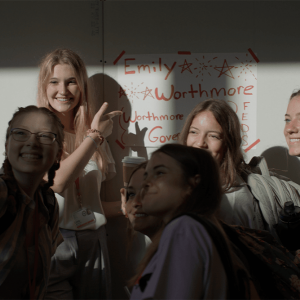
Emily Worthmore and additional “Girls State” participants in Girls State, now streaming on Apple TV+. Courtesy Apple.
Heading into an election year, directors Amanda McBaine and Jesse Moss knew the importance of chronicling how young people, especially young women, are working through political disillusionment. The directors follow up their 2020 release of Boys State with a “sibling” documentary in 2024’s Girls State, which follows the week-long experience of 500 high school girls who gather for a mock-government camp in Missouri.
Most Americans Support Religion in Public Life, but Avoid Disagreements
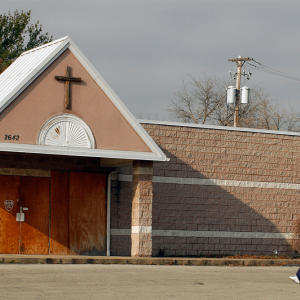
A woman walks past an empty, boarded-up church in Youngstown, Ohio, on Nov. 21, 2009. REUTERS/Brian Snyder
A new report from Pew Research Center found that while most Americans think religion has a positive influence on American life, few are willing to have discussions about religious differences.
The report revealed that a majority of American adults (80 percent) would say that “religion’s role in American life is shrinking,” which Pew reported as the highest in the survey’s history. Majorities in each religious group and the religiously unaffiliated say religion is losing influence.