I HAVE BEEN involved in many a church planning process over the years—I’m old enough to remember, say, Vision 2000, and Vision 2010, and Vision 2020 (extra points for that name). Doubtless now there are congregations across America involved in a “Vision 2030” process, and doubtless the first PowerPoint slide for their first meeting has words from Proverbs 29:18: “Where there is no vision, the people perish.”
We have tended to make a metaphor of this idea—we need a vision of the future, a prophetic vision to keep us from going astray. But in the ever stupider and crueler months of the Trump regime, we need to consider it as straightforward advice: If you can’t see what’s coming at you, you’re likely to get run over.
This spring, scientists reported that the administration had begun the systematic dismantling of the ocean sensor network that keeps track of the great currents of the seas. As The Guardian described the plans, it would remove “a network of robotic floats, moored buoys and research vessels experts describe as the ‘eyes and ears’ of the ocean.”
Is this a cost-saving gesture? No—the system is already there, with at least 10 years of life left. Apparently much of the equipment would simply be junked. (There’s not a big garage sale market for deep-water temperature sensors.) In fact, it’s a cost-raising gesture. As John Abraham, a Minnesota researcher, put it, “The U.S. government wants to save less than a billion in sensors.” But then he continued, “We have hundreds of billions in climate costs per year. The cost of the observation system is a fraction of the climate costs from hurricanes and storms that hit the U.S.”
Without vision, the predators will rob us all.
It would be particularly foolish to dismantle the ocean sensor network this year. We’re about to encounter what may be one of the biggest El Niño ocean warming cycles in history, and new science over the last month has dramatically raised the odds in the decades ahead of a shutdown of the great Atlantic currents, part of the largest heat-distribution system on earth. The first of these is certain to be a disaster; the second, if it happens, will be a civilization-shaking moment, possibly the largest single event in human history.
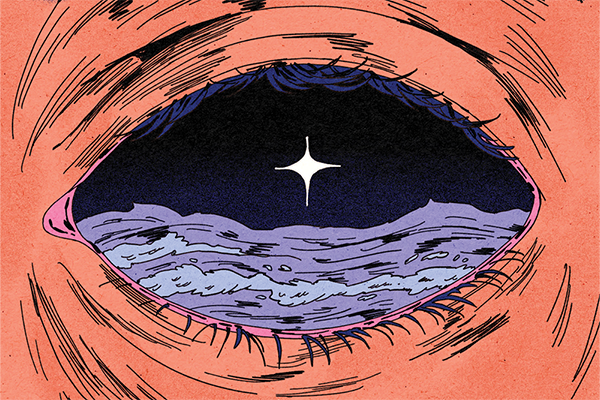
Thanks to the God-given intelligence that produced this complicated monitoring system, we have some way of providing warning—we have vision. To destroy it is to gouge out our eyes. That this is dumb goes almost without saying. But it’s more than that—it’s a complete abdication of the first job God assigned us, to steward this planet and exercise careful dominion over it. If you can’t see what’s coming, that’s impossible.
But we got good news as this column went to print: Apparently, intense public outcry about the silliness of this plan reached Congress, where members amplified the call. So the push to destroy the ocean sensor network has been at least temporarily abandoned, and for the year to come we will continue to know about the fate of the oceans. Given the approaching El Niño, which the latest science continues to forecast as historic, that’s particularly good news!
The Trump administration’s plan (fully undersigned by Big Oil) would have been like knocking out the security cameras at the start of a bank heist. Without vision, the predators will rob us all. That was, for a few weeks too long, our national policy.

Bill McKibben is an author and founder of Third Act, which mobilizes people over 60 for action on climate and justice.

Did this article have an impact on you? Tell us how! Whether you’re moved to take action, have a question, or want to share a comment (good or bad), we value your feedback!