Opinion
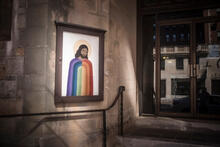
Last Tuesday, on the final day of Pride Month, Matthew Vines of The Reformation Project published an opinion piece for The New York Times called “I’m Gay, Not Queer. It Matters.” In it, he argues that in a national landscape growing increasingly hostile toward LGBTQ+ people, our movement would be better served by pivoting away from the word “queer”—both because of its umbrella quality, which “lacks clear limiting principles,” and because of its “adversarial charge” that implies we are, by nature, subversive and anti-normative. “Because the word ‘queer’ can describe any departure from social norms,” Vines argues, “it becomes an open door through which almost anyone can walk.” Because of what Vines reads as an overly expansive nature within the queer category, the public’s trust and understanding of the core parameters of what it means to be gay are being eroded. Vines asserts, instead, that his own self-acceptance came from acknowledging that “there is nothing inherently radical or subversive about being gay.” As such, he does not wish to be described as queer, with all the unwanted implications it brings.

In 1 Kings 19, God appears to the prophet Elijah. At this point in the biblical story, Elijah is the last remaining prophet who follows God, and many in the nation of Israel have stopped listening.
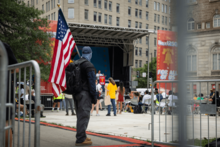
After much fanfare, America’s 250th birthday is finally upon us. Here in Washington, D.C., the White House-sponsored Freedom 250 celebrations don’t seem to be going too well, from the algae-filled debacle in the reflecting pool to the sparse crowds at the Great American State Fair on the National Mall. Elsewhere around the city, the president has refused to sign a bipartisan housing bill in order to blackmail Congress into passing measures that would disenfranchise millions of eligible voters. Last week’s Supreme Court decision gave the administration the ability to cruelly deport hundreds of thousands of Haitian and Syrian refugees. None of that makes me feel like celebrating.
When I think about our present political moment, I see echoes of the prophet Micah, who forewarned of coming disaster because both Israel and Judah’s political and religious leaders abused their power and conspired to do evil (2:1, 7:3), stole and plundered (2:8), oppressed the poor (3:3), despised justice and distorted the truth (3:9), and engaged in violence and deceit (6:12). At every turn, President Donald Trump seems more fixated on punishing his enemies and cementing his legacy through vanity projects than on anything resembling our nation’s founding ideals of “life, liberty, and the pursuit of happiness,” among other “inalienable rights” set forth in the Declaration of Independence.
But if Trump’s hubris is all we see as we observe this national milestone, we’re missing the bigger story.
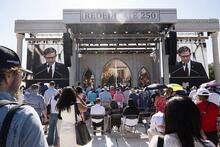
Amid celebrations of America’s 250th anniversary, assertions of the country’s religious, and specifically Christian, character have grown louder in political discourse.
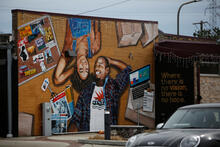
As the United States approaches the 250th anniversary of the Declaration of Independence, the Justice Department’s Civil Rights Division announced a lawsuit against the city of Evanston’s first-in-the-nation municipal reparations program. The DOJ claims that Evanston’s reparations program is “race discrimination, pure and simple.”
Such an act taps into the country’s heritage of discriminating against African Americans. There are surely more constructive ways to mark the nation’s semiquincentennial, but in President Donald Trump’s America, our nation’s abysmal history of discrimination is not a point of embarrassment but a point of pride. The lawsuit is part of a broader effort to roll back protections for Black Americans.

Sometimes the book of Proverbs can seem a little simplistic, its cause-and-effect declarations sounding nice but not very realistic. Proverbs 10:28 teaches us that “the prospect of the righteous is joy, but the hopes of the wicked come to nothing.” As Jake tells Brett at the end of Ernest Hemingway’s The Sun Also Rises: “Isn’t it pretty to think so?”
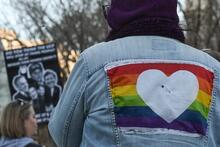
This Pride Month, I’ve been thinking a lot about the fullness of love. Recent polling from Gallup found that support for same-sex marriage has fallen noticeably since its previous height in 2022-23. This shift is largely due to Republicans, whose support for same-sex relationships fell from 55% to 37% in just a matter of years. While I find these numbers upsetting, I don’t find them surprising. After all, Pride itself didn’t begin as a celebration of love but as a protest against those determined to push that love back in the closet.
Love is at the heart of the gospel as well. Jesus taught that the greatest commandments were to love the Lord your God with all your heart, soul, mind, and strength, and to love your neighbor as yourself (Mark 12:30-31). All of Christianity can be condensed into these commandments (Matthew 22:38-40). However, Jesus also gave a third commandment regarding love, and it’s been weighing on my mind for some time now. Christians aren’t just called to love God and love our neighbors; we are also called to love our enemies (Luke 6:27-36).
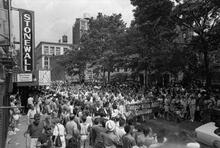
Stonewall is remembered for being the site of a riot. What I remember about that community is care.
By the time the New York Police Department entered the Stonewall Inn in lower Manhattan on June 28, 1969, a community already existed. The rebellion became famous because people fought back, but communities are not built in a single night. The Black and brown queer folk, transgender women, drag queens, sex workers, and young people who gathered at Stonewall had already spent years creating ways to survive. They had learned how to care for one another when families and churches would not and when the police attacked them. Stonewall was not the beginning of their steadfastness. It was the moment the rest of the world was finally forced to see it.
I have been thinking about what the church still has not learned from that historic moment. The church I am addressing here is not a monolith. I understand there are Christians for whom this entire conversation stops at the mention of the LGBTQ+ acronym. I am not writing for them today. I am writing for the rest of us. I am writing for people like me, who are resisting inequitable systems and imagining what liberation can look like for all that God has created.
The latest report from the Exploring the Pandemic Impact on Congregations initiative was published in April, and what it revealed was striking. Exploring the Pandemic Impact on Congregations is a “multi-faceted and longitudinal research project” dedicated to examining how churches in the U.S. responded to the COVID-19 pandemic, the long-term consequences of the pandemic on congregational life, and what congregational life looks like post-pandemic. For the first time since 2022, congregations saw a rebound in in-person attendance. Median in-person attendance jumped to 70 people, showing an increase from pre-pandemic levels, and the first increase for congregations in 25 years.
The study, backed by the Hartford Institute for Religion Research, echoes other reports that have pointed to modest increases in religious participation. As a pastor who also participated in the study, I can say that I have noticed this modest increase in religious participation in my own congregation. Congregational life seems to be on a modest upswing, but that does not erase decades of decline.

Ken Paxton and James Talarico are making headlines in unexpected ways in Texas as part of the two political opponents’ campaigns. The political direction of the state is on the line, but a millennia-old theological debate has taken center stage: What is God’s gender?
In 1954, the French Christian philosopher Jacques Ellul published a warning that the world was not ready to hear. In The Technological Society, he argued that the modern obsession with technique—efficiency, optimization, and the relentless pursuit of the one best way to do anything—was quietly fragmenting the human person from the inside.
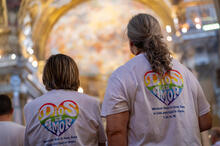
When I was coming out of the closet, I was looking for someone—anyone—to share about their experience of coming out as a queer woman raised Catholic.
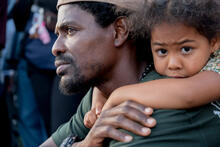
On May 18, two teenagers shot and killed three people in a coordinated attack on the Islamic Center of San Diego, which also houses a school. At the time of the shooting, there were 140 schoolchildren inside the center. Community members said that the three men who were killed—Amin Abdullah, Mansour Kaziha, and Nadir Awad—sacrificed their lives to protect the children. Subsequent investigations have found that the two gunmen left behind anti-Muslim, anti-Black, anti-women, and antisemitic writings.
In the wake of the shooting, it can feel easy to give in to despair as we witness yet another shocking act of violence against marginalized religious communities in the United States. But this is not a time for despair. Instead, it is a time for action. For Christians wondering what to do, here are five things you can do now to support Muslim communities and fight Islamophobia in your community.
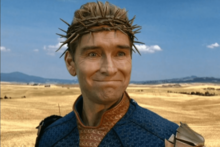
Amazon Prime’s The Boys wrapped up its fifth and final season last week, and its overarching theme was: faith. After becoming the de facto CEO of Vought and president of the United States, antagonist Homelander—a narcissistic Superman foil, wrapped in the American flag and played to perfection by Antony Starr—still isn’t satisfied.
Craving what he’s craved since lab birth—unconditional love and devotion with no expectation of anything in return—he declares himself a god and uses Vought’s media machinery to convince the American public of his divinity. Guided by visions of his former boss, Madelyn Stillwell—a Mary-esque mother-figure who, before he murdered her in Season One, used to breastfeed him—he ultimately decides to kill (“cleanse”) anyone who doesn’t “in their heart of hearts” believe in his divinity.
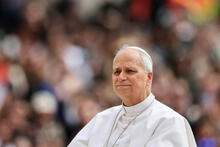
With the release of his encyclical letter Magnifica Humanitas on May 25, 2026, Pope Leo XIV has signaled that he wants the church to respond to artificial intelligence much as a predecessor, Pope Leo XIII, responded to upheavals during the Industrial Revolution over a century ago.
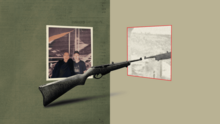
I saw a lot of things in Palestine that made me think about my gun. I had purchased it some years ago, when I realized what little democracy we had left in the United States was deteriorating. When you live in a country where an individual has the right to bear arms as a stopgap against tyranny, and then you suddenly realize you are witnessing tyranny’s rise, you arm up.
Micah 6:8 is one of the most well known and most quoted scriptures of the Old Testament prophets. “He has shown you, O mortal, what is good. And what does the Lord require of you? To act justly and to love mercy and to walk humbly with your God.” These words are eternally relevant, but sometimes they ring more urgently than others.
This week, the Trump administration announced a nearly $1.8 billion fund to compensate his allies who he believes have been unfairly investigated and prosecuted by the Department of Justice. As others, including legal experts, have noted, this amounts to Trump looting the nation to pay off his friends and supporters. In terms of scale, it may well be the most corrupt act in U.S. political history.
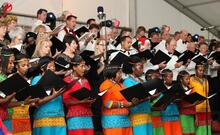
In a dark church, a dozen disciples gather in the upper room of the choir loft. We warm up our voices. We practice our hymns. Although we are not silent, in many ways, we are the disciples on the eve of Pentecost: waiting for the Spirit to descend.
I’m a lifelong choir member. I caught the bug in high school, joined a liturgical choir in college because the boy I had a crush on told me to, and I was briefly a member of St. Patrick’s Cathedral Choir in New York City. I keep finding my way up to the choir loft, even when other priorities crowd out my life. And as much as I enjoy cantoring, leading the congregation in song from the ambo, or singing from my pew with full heart and voice, sitting up in the choir loft among a chorus of voices is where I’ve always felt most at home in church.

On Sunday, May 17, members of the Trump administration will participate in “Rededicate 250: National Jubilee of Prayer, Praise & Thanksgiving,” a nine-hour prayer festival on the National Mall in Washington, D.C. The purpose of this festival is to call for America to rededicate itself to its Christian roots.
So, for what feels like the millionth time, a chorus of researchers, historians, and journalists all repeat: America’s founders didn’t want it to be a Christian nation.
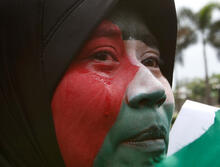
On April 19, the Armed Forces of the Philippines killed 19 individuals and forcibly displaced more than 653 residents in Negros Occidental, an island in the southern Philippines. The AFP defended their operation as necessary “to confront armed groups that threaten local communities,” while activist group Bagong Alyansang Makabayan (New Patriotic Alliance) contends that the attack constituted “indiscriminate firing and strafing.” For Bagong Alyansang Makabayan, it is another example of the Manila government’s fascist violence against the poor and unarmed civilians.
On April 20, a day later, the Israel Defense Forces launched airstrikes, killing five Palestinians in Gaza and leaving many others wounded. The Peace Research Institute Oslo reports that at least 75,200 people have been murdered by Israeli forces since October 2023. Indeed, while separated by thousands of miles, there is an intimacy that binds Palestine and the southern Philippines together—an intimacy forged through the destructive imperialism of the United States.